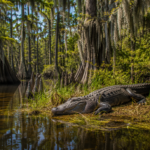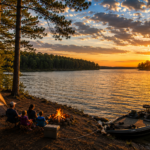

Camping at Stephen F. Austin State Park puts you 40 miles west of Houston on 664 acres of Brazos River bottomland — one of the closest true state park camping experiences to the Houston metro and the one that most people west of the city overlook in favor of driving further. The campground sits under a canopy of cottonwood, cedar, and Osage orange trees in a flat, quiet, no-generators setting that earns its reputation as one of the most peaceful parks near Houston.
The historical context here is as significant as anything in Texas. The site where Stephen F. Austin established the first Anglo-American colony in Texas in 1823 — on then-Mexican soil — sits adjacent to the park. San Felipe de Austin was the social and political capital of Austin’s colony and the place where the conventions that led to Texas independence were held. The Texas Rangers and the Texas postal system both trace their origins to this ground. If you’re camping here, you’re sleeping in the “Cradle of Texas Liberty.”
Active Alerts — Check Before You Book
2026 improvements ongoing: Some campsites may be temporarily unavailable during park improvements. Contact the park before visiting to confirm your preferred site type is available: (979) 885-3613.
Halloween Trail of Terror — October 10: The park hosts this annual event on October 10. The Primitive Group Camp, Primitive Campsites, Bullinger Lodge, and Bullinger Dining Hall are closed for the event. Expect significantly heavier traffic than usual. Halloween decorations will be present in the Day Use Area and along portions of the Pileated and Nature Trails throughout the month of October.
Trails: May close due to poor weather conditions. Contact the park before arrival if recent rain has occurred.
Getting There
Address: Park Road 38, San Felipe, TX 77473
Phone: (979) 885-3613
Entrance fee: $5/person/day (13+), children 12 and under free
Gate hours: Open daily
Office hours: Saturday–Thursday 8:30am–4:30pm | Fridays 8:30am–7pm
Park headquarters: Closes at noon on Thanksgiving Day, closed all day December 25
From Houston: I-10 West to exit 720 (Sealy/FM 1458). Take FM 1458 North. Turn right on Park Road 38. About 40 miles and 45–50 minutes from central Houston.
From Beaumont: I-10 West approximately 90 miles to exit 720. Same directions from there.
Reserve in advance: The park frequently reaches capacity, particularly during its busy seasons of March–May and October–November. TPWD recommends reserving both camping and day use passes online before you arrive to guarantee entry.
Reservations: texasstateparks.reserveamerica.com or (512) 389-8900
Campsite Types — What’s Available
Full Hookup RV Sites — 40 Sites
The most in-demand sites at Stephen F. Austin State Park — 40 pull-through sites with water, 30-amp electric, and sewer. Pull-through configuration means no backing in, which makes them the most practical full hookup option in the Houston-area state park system for larger RVs and fifth wheels. Situated in the shaded bottomland forest — no direct Brazos River views from the sites, but the shade keeps temperatures manageable even in summer.
No generators allowed anywhere in the park. This is the policy that defines the Stephen F. Austin camping experience — it’s genuinely quiet here in a way that parks allowing generators are not. If you need to run a generator, this is not your park. If you want peace after 10pm, it absolutely is.
Tent Sites with Water — 40 Sites
Water hookups without electricity. Picnic tables and fire rings. Situated in the shaded hardwood forest with restrooms and showers nearby. The flat, tree-covered terrain makes tent camping here comfortable in fall and spring. The no-generator policy means your neighbors aren’t running a generator next door regardless of their site type.
Walk-In Primitive Campsites — 25 Sites
No hookups. Walk-in access — park at the designated lot and carry your gear to the site. The most affordable and most private camping at Stephen F. Austin. Well-suited for tent campers who want shade and seclusion without the cost of a hookup site.
Screened Shelters — 20 Shelters
Electric hookups with ceiling fans inside a screened shelter. The bug-free sleeping option at Stephen F. Austin — important in a bottomland forest setting where mosquitoes are a factor at dawn and dusk in warm months. $30/night and consistently booked on spring and fall weekends. Reserve early.
Two-Bedroom Cabin — $125/Night
Sleeps up to six people. Full kitchen, living area, and private porch. Bring your own linens and toiletries — the cabin does not provide them. The only cabin at the park and the right option for a family group that wants the full Stephen F. Austin experience without tent camping. Books out well in advance during the busy season.
Group Facilities
Bullinger Lodge — Group overnight accommodation.
Bullinger Dining Hall — Group dining facility, reservable for events and reunions.
Group Walk-In Camp — Primitive group camping area.
Group Primitive Camp — Additional group space.
Note: Bullinger Lodge and Dining Hall close for the October 10 Halloween Trail of Terror event.
Fees
| Site Type | Fee |
|---|---|
| Full Hookup RV (pull-through) | $25–$30/night |
| Tent with Water | $15–$20/night |
| Walk-In Primitive | $15/night |
| Screened Shelters | $30/night |
| Two-Bedroom Cabin | $125/night |
All rates plus the $5/person/day entrance fee for adults 13 and older.
The No-Generator Rule
Stephen F. Austin State Park strictly prohibits generators throughout the entire park. This is worth understanding before you choose it.
The quiet hours are 10pm–6am, the standard for Texas state parks. But the no-generator policy means that even during the day you won’t have generator noise from neighboring sites — a meaningful quality of life difference from parks where RV generators run from 8am until quiet hours.
For RV campers who need to run appliances: the 30-amp full hookup sites cover everything except high-draw items that require 50-amp service. The park does not have 50-amp hookups — confirm your RV’s electrical requirements before booking.
Trails — 5 Miles Through Bottomland Forest
The trail system at Stephen F. Austin winds through the Brazos River bottomland — flat, shaded, and rated easy throughout. All trails are open to both hiking and mountain biking.
Nature Trail (Interpretive Trail): The primary introductory trail through the park, with interpretive markers explaining the bottomland ecosystem — the cottonwood, cedar elm, and Osage orange trees, the understory vegetation, and the wildlife that inhabits the bottomland hardwood forest. The easiest and most accessible trail in the park.
Pileated Trail: Named for the pileated woodpeckers that inhabit the park — one of the more dramatic woodpecker species, large and loud with a distinctive call and rectangular excavations in dead snags. This trail is the one to watch for woodland bird species throughout the park.
Multi-use trail system: The trails connect through the park and along the Brazos River bottomland, allowing longer loops. Total trail distance is approximately 5 miles, all on flat terrain suitable for any fitness level.
Firewood is sold by the Friends of Stephen F. Austin State Park — see any park host to purchase. Gathering wood is prohibited and subject to fines. The bottomland forest floor is a protected habitat and removing wood disrupts it.
The Adjacent Golf Course
One of the more unusual features of Stephen F. Austin State Park is that an 18-hole golf course sits directly next to it — the Stephen F. Austin Golf Course, about a 10-minute walk from the campground. The course winds through a pecan tree farm along the Brazos River. Deer and birds regularly appear on the fairways. It’s a genuinely good course in a beautiful bottomland setting.
For golfers in the family who want to combine a camping weekend with a round of golf in a scenic river setting, Stephen F. Austin State Park is the only Texas state park camping option where this is built into the trip without getting in a vehicle.
Call the golf course separately for tee times and current rates — it’s operated independently from the state park.
Brazos River — Fishing Only
The Brazos River runs along the park boundary and can be accessed for bank fishing. No swimming is allowed — the Brazos has swift currents and unpredictable water levels that make it genuinely dangerous for swimming. This is not a cautionary suggestion; it’s a hard rule for real reasons.
Bank fishing: Catfish, bass, and other river species are present. No fishing license required for shore fishing within the state park boundary.
No boat ramp at Stephen F. Austin State Park. The Brazos River access is bank fishing only.
Wildlife and Birding
Stephen F. Austin State Park has documented over 100 bird species — a function of the bottomland hardwood forest habitat along the Brazos River corridor, which provides the dense canopy and understory structure that woodland birds favor.
Pileated woodpeckers are the signature species — large, loud, with a distinctive yammering call. Their rectangular excavations in dead tree snags are visible throughout the park. The Pileated Trail is named for them.
Barred owls call throughout the night and are frequently heard and occasionally seen near the campground at dusk and after dark.
Other regular species: Cardinals, blue jays, Carolina chickadees, brown-headed nuthatches, Carolina wrens, and various warblers during spring and fall migration. The Brazos River corridor is a migration route and spring mornings produce good warbler diversity.
Mammals: White-tailed deer are common throughout the park, particularly near the campground at dawn and dusk. Raccoons, armadillos, opossums, foxes, squirrels, and skunks are all regular campground visitors. Bobcats have been documented but are rarely seen.
The Interpretive Center is open on Saturdays with exhibits on the park’s natural history. A good stop on a Saturday morning before hitting the trails.
The History — “Cradle of Texas Liberty”
The San Felipe de Austin State Historic Site, managed by the Texas Historical Commission, sits adjacent to the state park and covers the original townsite where Stephen F. Austin established the first Anglo-American colony in Texas in 1823. The site is where the conventions were held that directly led to Texas independence from Mexico.
Three things that originated on this ground:
- The first Anglo-American colony in Texas
- The Texas postal system
- The Texas Rangers (the law enforcement organization)
The historic site includes a replica of the original colonists’ fort and interpretive exhibits. It’s a 10-minute walk from the campground. Worth an afternoon on any trip to Stephen F. Austin State Park — the combination of camping in the bottomland forest and walking through the site where Texas effectively began is a genuinely SETX experience.
What to Pack
- Insect repellent — Bottomland mosquitoes at dawn and dusk from April through October. Non-negotiable.
- Quality cooler — Houston-area summer heat applies fully. No generators means no electric cooler.
- Dry bags — Afternoon thunderstorms move through the Brazos River bottomland fast.
- Cabin campers — bring your own linens and toiletries. The cabin does not provide them.
- Mountain bikes — The trail system is flat and well-maintained. 5 miles of easy multi-use trails are worth the effort of loading bikes.
- Binoculars — 100+ bird species in a forest with pileated woodpeckers and barred owls. Bring them.
Best Times to Visit
Fall (October–November): The park’s best camping window and its busiest. The bottomland forest in October is genuinely beautiful — fall color in the cottonwoods and hardwoods, migrating birds moving through the Brazos corridor, comfortable temperatures. Book as far ahead as possible. Note the October 10 Halloween Trail of Terror event if you’re planning a trip that weekend.
Spring (March–May): Spring wildflowers along the trail edges, active bird migration through the Brazos bottomland, and comfortable weather before summer heat builds. Second busiest season — reserve early.
Winter (December–February): The quietest time with the fewest visitors. Winter birding in the bottomland is underrated — waterfowl on the river, wintering songbirds in the forest, and the occasional bald eagle over the Brazos. Cold nights require real cold-weather gear.
Summer (June–August): Hot and humid. The park’s no-generator policy means the campground is quiet but the bottomland in July can be genuinely uncomfortable midday. Early morning trail time and shade-focused afternoons make it manageable.
FAQ
Is Stephen F. Austin State Park good for families?
Yes — the flat terrain and easy trails work for all ages, the campground is shaded and manageable for young kids, and the historic site adjacent to the park adds genuine educational value to the trip. The no-generator policy means a quiet campground, which families with young kids who need sleep appreciate.
Does Stephen F. Austin State Park have full hookup RV sites?
Yes — 40 pull-through sites with water, 30-amp electric, and sewer. No 50-amp service. No generators allowed anywhere in the park.
Can you swim at Stephen F. Austin State Park?
No. Swimming is not allowed in the Brazos River due to swift currents and unpredictable water levels. This is a firm rule, not a suggestion.
How far is Stephen F. Austin State Park from Houston?
Approximately 40 miles and 45–50 minutes west of central Houston via I-10 to exit 720.
What is the history of Stephen F. Austin State Park?
The park sits adjacent to San Felipe de Austin — the first Anglo-American colony established in Texas by Stephen F. Austin in 1823. The site is where the conventions leading to Texas independence were held and where both the Texas Rangers and the Texas postal system originated. The San Felipe de Austin State Historic Site, managed by the Texas Historical Commission, includes a replica fort and interpretive exhibits.
Are generators allowed at Stephen F. Austin State Park?
No. Generators are strictly prohibited throughout the entire park. RV campers requiring electricity should book the 30-amp full hookup sites.
Stephen F. Austin State Park is the camping option west of Houston that fills a gap the eastern parks don’t — a peaceful, shaded bottomland forest with full hookup pull-through RV sites, no generator noise, and the most significant historical site in the region a 10-minute walk away. It’s not the biggest or the most dramatic state park near Houston. It’s the one that people who’ve been there keep going back to.
For more camping options near Houston, see our camping near Houston TX with kids guide and our complete guide to the best campgrounds in Southeast Texas.
Before your trip, grab the free Ultimate Family Camping Checklist — 83 items across 7 categories, built for camping in Southeast Texas.
This post contains affiliate links. If you purchase through these links, we may earn a small commission at no extra cost to you. Thank you for supporting SETX Camping!