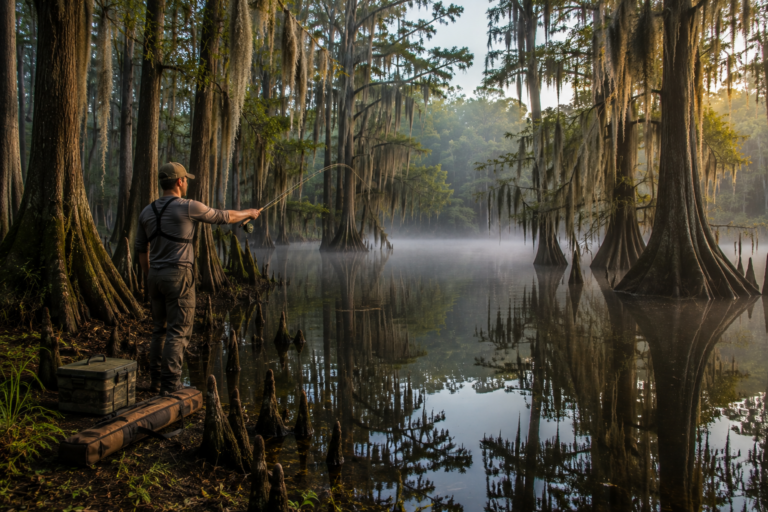
Fishing at B.A. Steinhagen Lake is built around two completely different environments — the shallow, vegetation-heavy main reservoir and the river channels above it. Most anglers who fish Steinhagen fish one or the other and miss what makes the other one good. The main lake is catfish and crappie country, with enough largemouth bass structure in the vegetation and timber to keep things interesting. The Neches River above the reservoir is where the truly large catfish concentrate, where spotted bass run in the Angelina River arm, and where you can fish water that feels a long way from the campground even when you’re not.
I grew up camping on this lake. My grandparents lived on B.A. Steinhagen and Bee Tree Slough is a spot I know the way you only know a place you’ve fished since childhood. The fishing here doesn’t get the press that Sam Rayburn gets, and that’s fine — the boat ramps are less crowded and the fish are still there.
Understanding the Lake
B.A. Steinhagen is a shallow reservoir by most standards. Average depth is 3–7 feet north of US 190 (the upper lake where the Neches and Angelina feed in) and 5–12 feet south of US 190 (the lower lake near the dam). That shallowness drives everything about how the lake fishes.
Vegetation is the dominant structure. Water hyacinth covers significant sections of the surface in summer — dense, matted, and full of bass underneath. Hydrilla grows throughout the water column in the main lake. American lotus beds cover the shallower flats. The vegetation changes the look and the fishing season to season and year to year as water levels and conditions shift.
Flooded timber is everywhere. When the reservoir was built in 1951–1953, the standing timber was never completely cleared. Fifty years later, flooded timber snags, stumps, and standing dead wood are found throughout the main lake and in every creek arm. Crappie and bass hold on this structure year-round.
The river channels are different water entirely. The Neches and Angelina River corridors above the main reservoir are where the larger catfish concentrate, where spotted bass run in the river current, and where the water depth and flow create habitat that the open lake doesn’t have. The Neches River above the reservoir consistently produces flathead catfish over 50 pounds.
Species — What’s Here and How to Target Them
Catfish — The Lake’s Primary Fishery
Catfish is the most popular game fish at B.A. Steinhagen Lake and for good reason — channel, blue, and flathead catfish are all present in good numbers, and the Neches River above the reservoir holds some of the largest flatheads in East Texas.
Channel catfish: The most common and most accessible catfish on the lake. Dependable population throughout — typical fish run around 2 pounds with larger ones caught regularly. Any rod and reel with strong enough line works. Cut bait, chicken liver, stinkbait, and night crawlers on a bottom rig produce channel cats throughout the lake year-round. The campground fishing piers at Sandy Creek Park and Martin Dies Jr. are productive for channel cats, particularly at night.
Blue catfish: Good numbers throughout the reservoir. Spring through summer fishing around structure is most productive — blues move upstream into the river channels in summer in search of cooler temperatures and move back downstream in winter. The river end of the lake (the upper end where the Neches feeds in) is where the larger blue cats are consistently caught. Slip sinker or Carolina rig with fresh cut shad or other cut bait fished on the bottom in the river channel. Trotlines and juglines produce blues and channels consistently for those who use them.
Flathead catfish: The trophy catfish of the Steinhagen system. Flatheads prefer live bait — live perch, live sunfish, or live shad rigged on a large circle hook and presented near the bottom in the deepest available river channel structure. The Neches River above the reservoir is the primary flathead habitat, and catches over 50 pounds are documented with some regularity in the river. Night fishing in the deeper river holes with live bait is the flathead strategy.
Largemouth Bass — Fair, Best in Cooler Months
The largemouth bass fishery at Steinhagen is fair — decent population, occasional fish over 4 pounds, but not the trophy bass lake that Sam Rayburn is. Fall, winter, and spring produce the most consistent bass fishing when the water cools and fish are active for longer periods of the day.
Vegetation fishing: When water hyacinth mats are heavy, bass stack underneath them. A Texas-rigged worm or beaver-style soft plastic punched through the mat or worked along the edges in pockets and openings produces bass that you won’t reach any other way. Hollow-body frogs walked across the surface of dense hyacinth mats produce explosive strikes in early morning.
Timber fishing: The flooded timber throughout the lake and in the creek arms holds bass year-round. Pitch-and-flip techniques with a heavy jig or Texas-rigged soft plastic into the timber produces the fish that don’t respond to moving presentations. Medium-heavy rod, 20 lb fluorocarbon, and patience.
Open water and grass edges: Shallow crankbaits, spinnerbaits, and swim jigs worked along the hydrilla edges and around American lotus beds produce bass in spring and fall when fish are actively feeding. Work the edges at first light — Steinhagen bass in clear shallow conditions are line-shy in bright sun.
Deeper structure: In winter, bass move off the flats and into the deepest available structure — the creek channel intersections and any depth variation in the otherwise flat lake. Drop shot rigs, big worms on a Carolina rig, and jigs fished slowly on the bottom produce winter fish.
Spotted Bass — Good Numbers in the Angelina River
One of the more underappreciated fishing opportunities at Steinhagen. Good numbers of spotted bass live in the Angelina River arm above the reservoir — a different fishing experience from the open-lake largemouth fishing and worth targeting specifically if you have a boat that can access the river corridor.
Spotted bass respond to medium-size crankbaits, swimbaits, and drop shots fished in the river current and around the submerged root structure and rock formations in the river channel. They’re typically smaller than the largemouth in the main lake but more aggressive and more willing to bite in tough conditions.
Crappie — Good, Peak in Spring
A good crappie fishery exists, especially in the spring. Both black and white crappie are present throughout the lake. The flooded timber is the primary crappie habitat — jigs and minnows fished vertically in and around timber in 8–15 feet of water produce crappie year-round.
Spring spawn moves crappie shallow into 3–6 feet around the timber edges and vegetation. This is the most accessible crappie fishing on the lake — small jigs in white and chartreuse dropped into timber pockets and around the base of standing dead snags in creek arm shallows.
Martin Dies Jr. State Park lighted fishing piers are productive crappie spots after dark — crappie are attracted to lights and the insects they bring.
White Bass — Spring Run Only
Low numbers of white bass are present and the fishery is limited to the early spring during the spawning run above the reservoir. The spawning run typically peaks in February through April. Work the creek mouths and the Neches River channel during this window with small jigs and inline spinners for action numbers.
Bluegill and Redear Sunfish — Excellent, Best for Beginners
Bluegill and redear sunfish are present in high numbers and provide good fishing, especially for youth or inexperienced anglers. The best entry-level fishing on the lake — consistently productive, easily accessible from the fishing piers at Sandy Creek and Martin Dies Jr., and catchable on simple gear with crickets or worms. The lighted piers at Martin Dies Jr. are productive bluegill spots throughout summer evenings.
Best Fishing Areas
Neches River Channel — Trophy Flathead Country
The most productive section of the entire system for large catfish. The Neches River channel above the reservoir — accessible by boat from the Martin Dies Jr. State Park boat ramps or the Sandy Creek Park ramp — runs through some of the most dramatic bottomland hardwood and cypress habitat in East Texas.
The deep river holes in the bends of the Neches hold flatheads all year. Fish the deepest available water in the river bends at night with live bait — live perch or live sunfish on a 6/0 or 8/0 circle hook, 40–50 lb monofilament leader, minimal weight. Set the rod in a rod holder, open the bail, and wait. The Neches River flathead bite is a slow fishing game but the payoff when it happens is unlike most freshwater fishing in the region.
Bee Tree Slough and Sandy Creek Arm — Crappie and Bass
The backwater sloughs and creek arms off the main reservoir — including the Sandy Creek arm on the southeast side and the Bee Tree Slough area — hold crappie in the timber year-round and bass in the vegetation through spring and fall. These calmer, more protected sections of the lake fish differently from the open main lake and tend to hold more fish during tough weather conditions.
The Walnut Slough Paddling Trail through Martin Dies Jr. State Park gives access to the Walnut Slough section of the system — the same backwater sloughs that are excellent fishing are also the most scenic paddling on the lake.
American Lotus and Hydrilla Flats — Bass and Sunfish
The shallow flats in the upper lake where American lotus and water hyacinth grow are the primary summer bass habitat. Work the edges in early morning and evening. Topwater presentations at first light over the open pockets in the lotus beds produce some of the most exciting bass fishing on the lake.
Bluegill and redear sunfish concentrate on these same flats in summer — the shallow vegetated areas are where a simple cane pole with a cricket can produce 40 panfish in an afternoon.
Main Lake Timber — Crappie Year-Round
The flooded timber throughout the main lake body — particularly in the creek arms and the transition zones between the open lake and the vegetation — holds crappie throughout the year. The most consistent crappie fishing is vertical jigging in 8–15 feet of water directly over submerged timber and stumps. A simple 1/16 oz jig with a 1.5-inch grub in white or chartreuse dropped to the depth where you see fish marks on your sonar.
Seasonal Patterns
Spring (February–May) — Peak Season
The best fishing window on Steinhagen. White bass make their spawning run in February–March. Crappie move shallow in March–April. Largemouth bass spawn in the vegetation and timber edges. Channel and blue catfish become more active as water temperatures rise.
The vegetation spring green-up is the key bass event — as hydrilla and water hyacinth come back after winter, bass stack into the newly available cover. Find the earliest green vegetation in coves with southern exposure and the fish will be there before anywhere else.
Summer (June–August) — Night Fishing for Catfish
Summer at Steinhagen is catfish season, same as every other SETX lake. Blue cats move into the river channels seeking cooler water. Night fishing with cut bait or live bait in the Neches River channel produces the best summer action.
Bass fishing in summer requires early morning before 9am or evening after 5pm. Topwater over the hyacinth mats at first light in summer is worth losing sleep over — the strikes are violent and the fish are large.
Fall (September–November) — Best Bass Season
As water temperatures drop from summer highs, bass return to more active feeding patterns throughout the water column. Crankbaits and spinnerbaits covering the hydrilla edges and timber transitions produce fall bass that are feeding aggressively before winter. The crappie bite in the timber is strong through fall.
Winter (December–January) — Deep and Slow
The slowest overall fishing period. Bass move to the deepest available structure — creek channel intersections and any depth variation in the lake. Slow presentations with drop shots and finesse jigs produce fish but require patience. Catfish remain catchable in the deeper channel areas.
Boat Ramps and Access Points
Sandy Creek Park (USACE): Two fishing piers, three boat ramps, southeast shore. One of the two main developed access points for the main reservoir. The fishing piers are productive for catfish at night and panfish during the day without needing a boat.
Magnolia Ridge Park (USACE): Three boat ramps, northwest shore. The Kids’ Fish Pond at Magnolia Ridge is stocked with catfish and rainbow trout — exclusively for anglers 15 and under and individuals with special needs. Free day pass required from Recreation.gov.
Martin Dies Jr. State Park: Multiple boat ramps across three units. Lighted fishing piers at several units — the lighted piers are the best crappie and panfish access at the lake. Separate TPWD entry fee applies.
Bevilport Boat Ramp: Primary access point for the Angelina River arm and the free primitive boat-in campsites. Launches into the upper system for river fishing and primitive camping.
Bluffview Park (USACE): Day-use area with boat ramp. No camping.
Gear for Steinhagen
Catfish
- Circle hooks 4/0–8/0 — Carolina rig for cut bait on blues and channels; direct bottom presentation for flatheads
- 30–50 lb monofilament leader for flathead fishing in the river channel
- Fresh cut shad or perch for blues; live perch or sunfish for flatheads
Bass
- Texas rig with 3/8–1 oz bullet sinker for the vegetation and timber
- Hollow body frog for the hyacinth mats in summer mornings
- Spinnerbaits and shallow crankbaits for the vegetation edges in spring and fall
- 17–20 lb fluorocarbon for timber fishing
Crappie
- 1/16 oz jig heads with 1.5-inch grub — white and chartreuse
- 4–6 lb monofilament or fluorocarbon
- Live minnows for spring shallow crappie
Sunfish/Panfish
- Simple cane pole or ultralight spinning rod
- Crickets, worms, or small jigs
- Kids’ fishing rod combo — the sunfish and bluegill bite at Steinhagen is ideal for young anglers
Bank Fishing
Bank fishing at Steinhagen is best at the campground fishing piers. Sandy Creek Park has two dedicated fishing piers on the southeast shore. Martin Dies Jr. State Park has lighted fishing piers at multiple units — the lighted piers are the best bank fishing spots on the lake, particularly for crappie and catfish after dark.
The Kids’ Fish Pond at Magnolia Ridge Park provides bank fishing access exclusively for anglers 15 and under and individuals with special needs. The pond is stocked annually with catfish and rainbow trout. Free Recreation.gov day pass required.
Fishing License
A Texas freshwater fishing license is required for all fishing at B.A. Steinhagen Lake. Available at tpwd.texas.gov, tackle shops in Jasper, or sporting goods stores.
Special regulations may apply — check current TPWD regulations at tpwd.texas.gov/regulations before fishing. Some species have specific rules.
Fish consumption advisory: Check the current TDSHS fish consumption advisory before keeping any catch from B.A. Steinhagen Lake, particularly blue catfish and flathead catfish.
FAQ
What is the best fish to catch at Steinhagen Lake?
Catfish — channel, blue, and flathead are all present and the most popular target. The Neches River above the reservoir is the best catfish water on the system, with flatheads over 50 pounds documented regularly. Crappie in the flooded timber and largemouth bass in the vegetation are the next most targeted species.
Where is the best catfishing at Steinhagen Lake?
The Neches River channel above the reservoir for the largest fish, especially flatheads. The main lake near the dam-side channel edges for summer blue cats. Sandy Creek Park and Martin Dies Jr. fishing piers for channel cats from the bank.
What is the best bait for Steinhagen Lake catfish?
Fresh cut shad or cut bait for blue catfish and channel catfish. Live perch or live sunfish for flathead catfish in the Neches River channel. Stinkbait and chicken liver also work for channel cats throughout the main lake.
Does B.A. Steinhagen Lake have bass fishing?
Yes — fair largemouth bass population with occasional fish over 4 pounds. Fall, winter, and spring are the best bass seasons when cooler water keeps fish active. Good numbers of spotted bass in the Angelina River arm above the reservoir. The vegetation and flooded timber provide consistent bass habitat throughout the lake.
What are the best boat ramps at Steinhagen Lake?
Sandy Creek Park (USACE) on the southeast shore with two fishing piers. Martin Dies Jr. State Park (three units, multiple ramps, lighted fishing piers). Bevilport for access to the Angelina River arm and the upper river system.
Is there bank fishing at Steinhagen Lake?
Yes — the fishing piers at Sandy Creek Park and Martin Dies Jr. State Park are the best bank fishing access. Lighted piers at Martin Dies Jr. produce crappie and catfish after dark. The Kids’ Fish Pond at Magnolia Ridge is available exclusively for anglers 15 and under.
For camping at Steinhagen Lake while you fish, see our complete guides:
- Sandy Creek Park — Complete Guide
- Magnolia Ridge Park — Complete Guide
- Free Primitive Camping on the Neches River
- Martin Dies Jr. State Park — Complete Guide
- B.A. Steinhagen Lake — Complete Overview
Before your trip, grab the free Ultimate Family Camping Checklist — 83 items across 7 categories, built for camping in Southeast Texas.
This post contains affiliate links. If you purchase through these links, we may earn a small commission at no extra cost to you. Thank you for supporting SETX Camping!