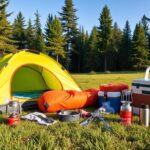

What to look for in a Backpacking Stove for SETX conditions
Generic stove reviews focus on cold-weather performance and wind resistance at altitude. That’s not us. Here’s what actually matters when you’re cooking on a trail in the Piney Woods or on a paddling trip in the Big Thicket: Heat affects canister fuel pressure. Isobutane-propane canisters perform best between 30–80°F. In SETX summers when ambient temps hit 95°F+, canisters can actually over-pressurize, causing inconsistent flame and occasional flare-ups. Keep canisters in the shade and out of direct sun. A liquid-fuel stove eliminates this issue entirely for serious summer trips. Humidity affects ignition. East Texas humidity is relentless. Piezo igniters can struggle in high-humidity conditions, especially on multi-day trips where moisture works into everything. Always carry a backup lighter or waterproof matches regardless of which stove you use. Wind matters more at the coast than in the Piney Woods. The Big Thicket and Sam Rayburn are reasonably sheltered. Bolivar Peninsula and the Gulf Coast beach camping areas are exposed — wind is a constant. If your camping involves beach sites, wind resistance moves up the priority list significantly. Burn bans are real. Texas issues burn bans frequently during dry periods, and they can cover open flames including stoves in some circumstances. Always check tpwd.texas.gov before your trip. A canister stove in a designated campsite is almost always permitted even during bans, but a wood-burning stove on open land may not be. Know before you go. Weight matters less in SETX than in the Rockies. Most SETX backcountry trips are short — the Big Thicket’s longest trail is under 20 miles. You’re rarely covering 15+ miles per day the way a Sierra Nevada thru-hiker is. Saving 2 ounces on a stove matters less here than reliability and fuel availability.Best Backpacking Stove — reviewed for Southeast Texas
Best overall: Soto Windmaster
Weight: 3 oz | Price: ~$80 | Fuel: Isobutane-propane canister The Soto Windmaster earns its name. Its patented micro-regulator burner is genuinely wind-resistant — it produces a focused, efficient flame even in the coastal breezes you’ll encounter on Gulf-area camping. For most SETX trail and water camping situations, this is the stove I’d reach for first. The 11,000 BTU output boils water fast and handles real cooking — not just ramen and coffee. The piezo igniter is reliable, the 4-flex pot supports handle a range of cookware, and the pressure regulator keeps consistent output across a canister’s fuel life. At 3 ounces it disappears into a daypack. SETX verdict: The best backpacking stove for Big Thicket and Sam Rayburn trips. The wind resistance makes it the right call for beach camping at Bolivar Peninsula too. Pack a backup lighter for humid conditions. Shop Soto Windmaster on AmazonBest budget pick: Soto Amicus
Weight: 2.9 oz | Price: ~$50 | Fuel: Isobutane-propane canister Same Soto engineering as the Windmaster at a lower price. The Amicus sacrifices the advanced pressure regulator and some wind resistance but keeps the compact design, piezo igniter, and solid pot support system. At $50 it’s one of the best value backpacking stoves available. For calm-weather Big Thicket trips and protected Sam Rayburn sites, the Amicus performs nearly as well as the Windmaster. Where it falls short is in coastal wind — the Windmaster’s regulation system earns its price difference in exposed conditions. The piezo igniter can be finicky in high humidity — carry matches. SETX verdict: The right pick for Piney Woods and lake camping where wind isn’t a primary concern. Save $30 over the Windmaster if you’re not regularly camping on the coast. Shop Soto Amicus on AmazonUltralight budget: BRS-3000T
Weight: 0.9 oz | Price: ~$20 | Fuel: Isobutane-propane canister The BRS-3000T is the smallest, lightest, cheapest canister stove you can buy. At under an ounce and $20, it sounds too good to be true — and the tradeoffs are real. No piezo igniter, no wind resistance, and it needs a lighter to start. In calm warm weather, it boils water fine. In wind or cold, it struggles. For SETX specifically, the heat/humidity performance is actually decent since we’re never dealing with sub-freezing temps that tank canister pressure. Where it falls down is wind — exposed cooking with a BRS takes patience and a windscreen. SETX verdict: A legitimate ultralight backup stove or a fine option for calm sheltered cooking. Not recommended as a primary stove for beach or exposed camping. At $20 it’s worth having as a spare. Shop BRS-3000T on AmazonBest for fast boils: MSR PocketRocket Deluxe
Weight: 3 oz | Price: ~$70 | Fuel: Isobutane-propane canister The PocketRocket Deluxe is one of the most consistently well-reviewed backpacking stoves at any price. It boils 1 liter of water in about 3 minutes 15 seconds in calm conditions — genuinely fast — and its pressure regulator keeps consistent output down to the bottom of the canister. The integrated piezo igniter works reliably, the serrated pot supports grip well on uneven ground, and the wind shield extends around three sides. Not as wind-resistant as the Soto Windmaster in open conditions but better than most canister stoves at this price. SETX verdict: A great choice for any SETX backcountry trip where fast water boiling is a priority — kayak camping on the Neches River, overnight Big Thicket trips, quick-boil coffee before breaking camp. Compact enough for a day bag side pocket. Shop MSR PocketRocket Deluxe on AmazonBest integrated system: Jetboil MiniMo
Weight: 14 oz (stove + pot) | Price: ~$170 | Fuel: Isobutane-propane canister The Jetboil MiniMo is a complete cooking system — stove and pot integrated into one unit with a cozy sleeve that retains heat. Its fuel efficiency is exceptional: it boils 1 liter of water using about 0.28 oz of fuel in calm conditions. The pressure regulator delivers consistent output, and unlike older Jetboil models, the MiniMo has real simmer control for cooking actual food rather than just boiling water. The integrated system means one less thing to pack, and the cozy keeps hot food warm at camp. The tradeoff is weight — at 14 oz with the pot it’s heavier than a standalone canister stove plus a separate lightweight pot. SETX verdict: Best for multi-day SETX water trips where fuel efficiency matters — kayak camping on Sam Rayburn or the Neches River where you’re carrying everything in a dry bag. The compact all-in-one system packs neatly and the simmer control makes it genuinely useful for real campfire cooking when fires are banned. Shop Jetboil MiniMo on AmazonBest for beach camping: MSR WindBurner
Weight: 15.3 oz | Price: ~$190 | Fuel: Isobutane-propane canister The WindBurner is engineered specifically for wind. Its radiant burner is fully enclosed — wind genuinely cannot reach it. Where other canister stoves require you to find shelter or build a windscreen, the WindBurner just cooks regardless of conditions. Boil time in wind barely changes from its calm-weather performance. It’s heavier and more expensive than the Windmaster, and simmer control is limited — it’s primarily a water-boiling machine. But if you’re camping regularly on the Bolivar Peninsula or Gulf Coast where wind is simply part of the environment, those tradeoffs are worth it. SETX verdict: Niche but worth it for regular Gulf Coast and beach camping. Overkill for sheltered Piney Woods and lake trips. If you camp often at Bolivar or Sea Rim State Park, this is the stove that eliminates wind frustration entirely. Shop MSR WindBurner on AmazonBest multi-fuel: MSR WhisperLite Universal
Weight: 14.9 oz | Price: ~$160 | Fuel: Canister gas, white gas, kerosene, unleaded The WhisperLite Universal is the stove you take when canister fuel availability is uncertain. On remote SETX trips where you’re far from an outdoor retailer, being able to run on white gas or even unleaded gasoline is a meaningful advantage. The line has been trusted by serious outdoorspeople since 1984. It’s heavier than canister stoves, takes more setup time, and requires priming — this isn’t a beginner stove. But for extended remote trips in the Big Thicket or multi-week canoe expeditions on SETX waterways, the fuel flexibility is genuinely valuable. SETX verdict: The right choice for serious extended backcountry trips where you can’t guarantee canister fuel resupply. For most SETX weekend campers, it’s more complexity than necessary. But if you’re planning a week-long Big Thicket traverse or a serious river expedition, the fuel versatility earns its place. Shop MSR WhisperLite Universal on AmazonWorth considering: Solo Stove Lite (wood-burning)
Weight: 9 oz | Price: ~$70 | Fuel: Twigs, sticks, dead wood The Solo Stove Lite burns whatever small dead wood you find on the ground — no fuel canisters to carry, no supply issues, no canister disposal in remote areas. In the Piney Woods, dead fuel is everywhere. The stove’s double-wall design creates an efficient secondary combustion that burns surprisingly hot and clean for a wood stove. The critical SETX caveat: burn bans. Texas issues them regularly, and a wood-burning stove on open land or in a designated campsite during a ban could get you a fine or campsite closure. The Solo Stove is also genuinely harder to use in damp conditions — East Texas humidity keeps wood wetter than you’d expect. You’ll need dry tinder stored in a bag. In a good season with no burn ban and reasonably dry conditions, the Solo Stove Lite is a rewarding and fuel-free option for Big Thicket camping. Just go in with eyes open about the limitations. SETX verdict: A legitimate option for Piney Woods camping in fall and spring when burn ban risk is lower and conditions are drier. Check tpwd.texas.gov before every trip. Not recommended as your only stove. Shop Solo Stove Lite on AmazonBudget simmering: Primus Essential Trail
Weight: 4 oz | Price: ~$30 | Fuel: Isobutane-propane canister The most affordable canister stove on this list with genuinely good simmer control — an unusual combination at the $30 price point. It’s heavier than the BRS-3000T and lacks wind resistance, but the valve control is smooth and precise, making it more useful for actual cooking beyond just boiling water. SETX verdict: A solid choice if you want simmer capability on a tight budget and your trips are in sheltered Piney Woods or lakeside areas. Step up to the Soto Amicus if wind is any concern. Shop Primus Essential Trail on AmazonQuick comparison — stoves for SETX camping
| Stove | Price | Weight | Best SETX Use | Wind Resistance |
|---|---|---|---|---|
| Soto Windmaster | ~$80 | 3 oz | All-around, beach, Piney Woods | Excellent |
| Soto Amicus | ~$50 | 2.9 oz | Sheltered Piney Woods, lake trips | Good |
| BRS-3000T | ~$20 | 0.9 oz | Backup stove, calm conditions | Poor |
| MSR PocketRocket Deluxe | ~$70 | 3 oz | Fast boils, any sheltered trip | Good |
| Jetboil MiniMo | ~$170 | 14 oz | Multi-day kayak/water trips | Good |
| MSR WindBurner | ~$190 | 15.3 oz | Gulf Coast beach camping | Excellent |
| MSR WhisperLite Universal | ~$160 | 14.9 oz | Extended remote backcountry | Good |
| Solo Stove Lite | ~$70 | 9 oz | Fall/spring Piney Woods (no ban) | Poor |
| Primus Essential Trail | ~$30 | 4 oz | Budget sheltered camping | Poor |
The SETX camping stove rule of thumb
Car camping at a state park — Coleman Classic 2-Burner propane stove from our budget camping gear guide. No question. Backpacking or backcountry in the Piney Woods — Soto Amicus or MSR PocketRocket Deluxe. Light, reliable, available at any outdoor retailer. Gulf Coast or beach camping with wind — Soto Windmaster or MSR WindBurner. Wind resistance is worth paying for. Multi-day kayak or canoe expedition — Jetboil MiniMo for fuel efficiency, or MSR WhisperLite Universal if you need fuel flexibility. Burn ban or fuel-free camping — Solo Stove Lite in fall/spring seasons, with a canister stove as backup. Check current burn ban status before every trip at tpwd.texas.gov.FAQ
What stove do I need for camping in the Big Thicket? For Big Thicket backcountry camping, a compact canister stove is the right call. The Soto Amicus or MSR PocketRocket Deluxe at $50–70 covers everything you need for SETX trail cooking. The trails are sheltered enough that extreme wind resistance isn’t a priority. Can I use a wood-burning stove in Southeast Texas? Sometimes. The Solo Stove Lite works well in the Piney Woods when conditions are dry and no burn ban is in effect. Texas burn bans are common during dry periods and can restrict open flames. Always check tpwd.texas.gov before your trip. What’s the best stove for beach camping at Bolivar Peninsula? Wind is the main challenge at Bolivar. The Soto Windmaster handles Gulf Coast wind well at a reasonable price. The MSR WindBurner is the best wind-resistant option available but costs significantly more. Either works — the Windmaster is the better value for most campers. Does the heat affect canister stoves in Texas summers? Yes — in extreme heat (95°F+), isobutane canisters can over-pressurize, causing uneven flame. Keep canisters in the shade and never leave them in a hot car or direct sun. For summer backcountry trips, the MSR WhisperLite Universal on white gas sidesteps this issue entirely. Do I need a backpacking stove for camping near Houston? For most campgrounds near Houston — Brazos Bend, Huntsville, Lake Livingston, Galveston — a two-burner car camping stove is the right call. A backpacking stove only becomes necessary when you’re leaving vehicle access behind. See our guide to camping near Houston TX with kids for full campground details. Where can I buy fuel canisters near SETX campgrounds? REI in Houston and Beaumont carry isobutane canisters. Academy Sports and Bass Pro shops carry them as well. For remote trips, buy fuel before you leave — gas station convenience stores and small-town hardware stores rarely carry isobutane. White gas (for the WhisperLite) is available at most hardware stores.Ready to plan your next SETX backcountry trip? Start with our guide to the Best Campgrounds in Southeast Texas for destination ideas, and the 10 Camping Hacks That Actually Work in Southeast Texas for trip prep. This post contains affiliate links. If you purchase through these links, we may earn a small commission at no extra cost to you. Thank you for supporting SETX Camping!
Before your next trip — grab the free checklist
The Ultimate Family Camping Checklist covers 83 items across 7 categories — shelter, sleeping, cooking, clothing, safety, kid gear, and camp comfort. Built specifically for camping in Southeast Texas.
Download the Free Checklist