The best camping gear for Texas is not the same as the best camping gear for Colorado, Maine, or the Pacific Northwest. Every major outdoor gear publication writes their reviews for a median climate that doesn’t exist in Southeast Texas — a world where cold nights are the primary challenge, where ventilation is an afterthought, and where a tent rated to 20°F is considered a versatile choice.
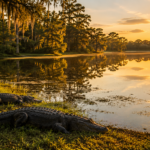
Camping in Southeast Texas means 95°F afternoons with 90% humidity. It means mosquitoes thick enough near the water to end a trip. It means afternoon thunderstorms that build and hit in under 30 minutes. It means fire ant mounds in the grass and alligators near every waterway. The gear that works here is specific to those conditions, and this guide covers all of it — from the tent on your site to the bug spray in your pocket.
What Makes Texas Camping Gear Different
Before getting to the specific picks, it’s worth understanding why gear selection matters more in Texas than in most of the country.
Heat and humidity are your primary enemies. From May through September, Southeast Texas temperatures regularly exceed 90°F with humidity that makes it feel ten degrees hotter. Gear that doesn’t account for heat management — poor tent ventilation, heavy sleeping bags, dark-colored coolers — actively works against you.
Rain comes fast and hard. SETX afternoon thunderstorms are not gentle. A tent without a real rainfly, a cooler with a poor lid seal, electronics without dry bags — all of them fail in conditions that happen regularly here. Plan for rain on every trip, not as an exception.
Bugs are serious. Southeast Texas mosquitoes near waterways are genuinely aggressive from late spring through early fall. This isn’t a minor inconvenience — it’s a trip-ending situation without the right repellent. The gear section on insect protection is not optional.
You need cooling, not insulation. The most common gear mistake SETX campers make is buying for the wrong climate. Cold-weather sleeping bags, insulated jackets as primary layers, small coolers — all carry-overs from national gear lists that don’t apply here.
Shelter — Tents for Texas Heat
A tent for Southeast Texas needs two things above everything else: mesh panels for airflow and a full rainfly that reaches near the ground. The ventilation keeps the humidity manageable overnight. The rainfly handles the afternoon storms.
The fiberglass poles that come with budget tents are the most common failure point in SETX conditions — they bend in clay soil and snap in wind. Quality shepherd’s hook stakes ($8–$12 for a set) are the first upgrade to make on any tent.
What to look for:
- Double-wall construction (separate mesh inner and rainfly)
- Large mesh upper panels on the inner tent
- Full coverage rainfly — not a half-fly that leaves lower mesh panels exposed
- A bathtub floor to handle wet ground
Our complete tent recommendations at every price point — from the Coleman Sundome for occasional use to the NEMO Aurora Highrise for serious family camping — are in our
best camping tents for Texas 2026 guide.
Coleman Sundome 4-Person Tent — Budget pick, good ventilation, frequently on sale in the $45–$60 range.
NEMO Aurora Highrise 4 — Best overall for SETX conditions, excellent mesh ventilation, full rainfly, two doors.
Sleep System — Stay Cool, Not Warm
This is the category where most SETX campers over-spend on the wrong gear. Cold-weather sleeping bags are useless here from March through November and actively uncomfortable in summer.
Sleeping bag rating for SETX:
- Summer (June–August): A sheet or sleeping bag liner is enough. Temperatures rarely drop below 75°F overnight.
- Spring/Fall (March–May, September–November): A bag rated to 40–50°F is the right choice.
- Winter (December–February): A 20–30°F rated bag for the coldest nights, particularly near the Gulf Coast where wind chill matters.
Coleman Sunridge 40°F Sleeping Bag — The correct sleeping bag for most SETX camping. Rectangular cut for ventilation, synthetic fill handles humidity, under $35.
Sleeping pad: A pad insulates you from the ground and provides cushion — both matter on SETX clay soil. A basic foam pad works. An inflatable pad is more comfortable. Either is fine for car camping.
Battery-powered fan: In Southeast Texas this is not optional from May through October. A fan hanging from the peak of your tent overnight is more impactful for sleep quality than almost any other piece of gear you can buy. The
Odoland lantern fan combo at $20 does the job — LED lantern and two-speed fan in one unit, runs on D batteries for up to 50 hours.
Coolers — The Most Critical Gear Decision for Texas Summer
In Southeast Texas, your cooler is infrastructure. A cheap cooler fails by noon on a 90°F day. Food safety becomes a real issue by day two. A quality cooler in SETX summer is not a convenience — it’s what keeps you from driving home early.
The line that matters: Standard injection-molded coolers (the $20–$40 department store variety) use thin walls and no gasket seal. They keep ice for 18–24 hours at Texas summer temperatures. Rotomolded coolers with 2–3 inches of foam insulation and a freezer-grade lid gasket keep ice for 5–10 days in the same conditions.
Budget option: Coleman Xtreme 5-Day — Not rotomolded but handles a long weekend reliably at $60–$80. The minimum we’d recommend for SETX summer camping.
Best value rotomolded: RTIC 45 Ultra-Tough — Made in Cypress, Texas. Rotomolded, 3-inch insulation, real ice retention at a price about 30% less than YETI.
Best overall: YETI Tundra 45 — Founded in Austin. Up to 10 days ice retention in independent testing. Worth the price for serious campers who go often.
The full comparison — ice retention data, honest assessments, and what’s worth the money at each tier — is in our
best camping coolers for Texas heat guide.
Bug Protection — Non-Negotiable Near SETX Water
This is the section that separates campers who’ve been to Southeast Texas from those who haven’t. The mosquitoes near Village Creek, Lake Livingston, B.A. Steinhagen, or Bolivar Peninsula in summer are not the mosquitoes of most other camping destinations. They are thick, aggressive, and they will end your trip if you’re unprepared.
Insect repellent:
Clothing treatment: Permethrin spray applied to clothing before your trip lasts through multiple washes and adds a second layer of protection beyond skin-applied repellent. Worth doing for any trip near SETX waterways.
Thermacell: For campsite perimeter protection — a butane-powered repellent device that creates a 15-foot mosquito-free zone around the unit. Used by serious SETX campers everywhere from Bolivar to Sam Rayburn.
Thermacell Radius is the current top model.
The full breakdown — DEET vs. Picaridin vs. natural options, what actually works on SETX mosquitoes, and the Thermacell detailed review — is in our
best insect repellent for camping in Texas guide.
Camp Kitchen — Cook in Texas Conditions
Texas camping kitchen gear is simple. The list that works:
Camp stove: A two-burner propane stove for family cooking, a single-burner for solo or minimalist trips.
Coleman Two-Burner Camp Stove is the standard — reliable, widely available, easy to find replacement propane canisters.
Cast iron skillet: A
Lodge 10-inch cast iron goes on the stove, over the fire grate, or in the coals. It does everything. Buy it at Walmart for $25 rather than from an outdoor retailer for three times the price.
Dutch oven: A
Lodge camp Dutch oven opens up cobblers, chili, stews, and bread. Not essential for a weekend trip but worth owning if you camp regularly.
Heavy-duty foil: Foil packet meals are the best camp cooking method for families in Texas heat — fast, customizable, zero cleanup. Buy the wide, heavy-duty rolls.
Texas-specific cooking note: During burn bans — which SETX issues during dry periods — all cooking must be done on a propane stove. No campfire cooking, no charcoal. Always check current burn ban status at the
Texas A&M Forest Service before your trip.
For 40 complete campfire recipes built specifically for SETX conditions, see the
Southeast Texas Campfire Cookbook.
Shelter from Sun and Rain — Tarps and Canopies
In SETX, a shade canopy over your campsite is not a luxury — it’s the item that makes the difference between a comfortable afternoon and a miserable one. At open beach sites on Bolivar Peninsula, there are no trees. At many campgrounds the site shade is partial at best.
Pop-up canopy: A
10×10 pop-up canopy at $40–$60 from Walmart provides shade for the cook area, cooler, and sitting space. The cooler under a canopy retains ice 30–50% longer than one sitting in direct sun — real savings on ice cost over a weekend.
Tarp and paracord: A
10×12 poly tarp and 50 feet of paracord gives you a flexible rain and shade structure that works anywhere. Hang between trees, over a picnic table, or from a canopy frame. The most versatile $20 in your camp kit.
Lighting
Headlamp: Every person in camp needs their own. The
Petzl Tikkina at $20 is the standard recommendation — 200 lumens, IPX4 water resistance, runs on AAA batteries. For serious trail use, the Black Diamond Spot 400 at $40 is worth the upgrade.
Lantern: A campsite lantern for the table and cooking area. Battery-powered LED lanterns have replaced propane lanterns for most casual campers — no fuel management, safer around kids, longer runtime.
Water and Hydration
In Texas summer heat, water is infrastructure. Underestimating water needs is the most common preventable camping problem.
Minimum: One gallon per person per day in summer, half a gallon in fall and winter.
Insulated water bottles: Insulated stainless steel bottles keep water cold for hours in Texas heat. A standard plastic bottle is warm in 30 minutes on a summer campsite.
Water filter: For any primitive camping near rivers — B.A. Steinhagen, Village Creek, Big Thicket backcountry — a
Sawyer Mini water filter is lightweight, reliable, and removes bacteria and protozoa from natural water sources.
Dry Bags — Protect Everything from Moisture
SETX camping is wet camping. Humidity, afternoon storms, creek crossings, boat launches — moisture finds everything you don’t protect.
A
set of dry bags in multiple sizes is the cheapest meaningful upgrade to any SETX camp kit. Sleeping bag, electronics, fire starter kit, and clothing all go in dry bags before anything else. On paddling trips to places like Village Creek or B.A. Steinhagen, dry bags are mandatory.
Safety and First Aid
First aid kit: At minimum — bandages, antiseptic wipes, antibiotic ointment, pain reliever, antihistamine for bug bites and fire ant stings, and tweezers. The tweezers are specifically for fire ant stingers embedded in skin — a situation that comes up more often than most non-SETX campers expect.
Snake gaiters: For backcountry hiking in Big Thicket or along East Texas river corridors. Water moccasins and copperheads are both present. Not required for developed campground trails but worth having for anyone pushing into the brush.
Fire ant awareness: Check every surface before you set up chairs, tents, or sleeping areas. Fire ant mounds in SETX grass can be well-camouflaged, particularly after rain.
Budget Gear — When to Spend and When to Save
The gear decisions that matter most in SETX are the tent, the cooler, and the bug protection. These are where performance differences between cheap and quality are real and immediate.
Everything else — camp chairs, basic cookware, tarps, headlamps, folding tables — has a floor price below which quality drops noticeably, but that floor is usually $15–$30, not $150.
A complete functional camp kit for Texas camping can be assembled for $280–$315 using budget picks. Our
complete budget camping gear guide covers every item with specific picks at the right price points.
For campers just starting out — first kit, first trip, no idea what you actually need versus what gear marketing says you need — our beginner camping gear guide walks through exactly what to buy and what to skip.
Texas Camping Gear Checklist — The Essentials
Print this and check it before every trip:
Shelter and sleep:
- Tent with mesh panels and full rainfly
- Heavy-duty tent stakes
- Sleeping bag (40–50°F for spring/fall, liner or sheet for summer)
- Sleeping pad
- Battery-powered tent fan
Cooling and food:
- Quality rotomolded cooler with block and cubed ice
- Two-burner propane stove
- Propane canisters (two per day minimum)
- Cast iron skillet
- Heavy-duty aluminum foil
Bug and sun protection:
- DEET or Picaridin insect repellent
- Permethrin clothing spray (apply at home)
- Thermacell for campsite perimeter
- SPF 50+ sunscreen
- Pop-up canopy or tarp for shade
Lighting and hydration:
- Headlamp for every person (with extra batteries)
- Campsite lantern
- Insulated water bottles
- One gallon water per person per day (summer)
- Water filter for primitive sites
Safety:
- First aid kit with antihistamine and tweezers
- Dry bags for electronics and sleeping gear
- Charged phone with offline maps downloaded
FAQ
What camping gear is most important for Southeast Texas?
In order of priority: a tent with real ventilation and a full rainfly, an insect repellent you’ll actually apply consistently, and a cooler with genuine ice retention. These three items determine the quality of a SETX camping trip more than anything else.
What sleeping bag do I need for camping in Texas?
A bag rated to 40–50°F is right for spring and fall. In summer, a sheet or sleeping bag liner is enough — temperatures rarely drop below 75°F overnight in SETX. Cold-weather bags are not needed and are actively uncomfortable in our climate.
Is YETI worth it for Texas camping?
Yes, if you camp regularly. YETI’s 5–10 day ice retention in Texas summer heat — confirmed in independent testing — means fewer ice runs, less food waste, and a cooler that still has ice on day four when a budget cooler is already a warm box. If you camp two or more weekends a year in SETX summer, the cooler pays for itself in ice savings within a season.
What bug spray actually works in Southeast Texas?
25–30% DEET or 20% Picaridin are both effective against SETX mosquitoes. The light 5–10% formulations sold at convenience stores near campgrounds are not adequate near SETX waterways. Apply before dusk, not after the mosquitoes have found you.
What gear do beginners need for their first Texas camping trip?
Start with five things: a tent (Coleman Sundome is fine for a first trip), a sleeping bag rated to 40°F, a headlamp, insect repellent, and a cooler that actually holds ice. Everything else is comfort and convenience. See our full beginner camping gear guide for the complete first-kit list.
For deep dives on specific gear categories, see these guides:
And for planning where to take all this gear in Southeast Texas, see our
best campgrounds in Southeast Texas.
Before your next trip, grab the free
Ultimate Family Camping Checklist — 83 items across 7 categories, built for camping in Southeast Texas.
This post contains affiliate links. If you purchase through these links, we may earn a small commission at no extra cost to you. Thank you for supporting SETX Camping!