
How to Camp on a Budget in Texas Starts With Where You Camp
The single biggest lever you can pull on a camping budget is the campsite fee. Texas has more free and low-cost camping options than most people realize — you just have to know where to look.Free Camping in Texas
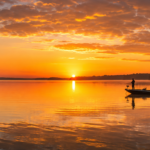
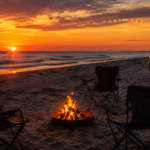
Bolivar Peninsula / Crystal Beach is the most accessible free camping in Southeast Texas. Twenty-seven miles of Gulf Coast beach where you can pull your vehicle up, set up camp, and pay nothing. No permit, no reservation, no fee. The tradeoff is no facilities — you’re self-contained or you’re uncomfortable. But for a weekend trip with the right gear, it’s hard to beat. Full guide coming soon in our free camping in Texas post. B.A. Steinhagen Lake primitive sites are thirteen free boat-in campsites along the Neches and Angelina Rivers managed by the U.S. Army Corps of Engineers. Completely free, completely wild, boat access only — and one of the most underused camping opportunities in all of SETX. You need a permit, which is also free. We broke down every site, the permit process, and exactly what to pack in our complete guide to primitive camping at B.A. Steinhagen Lake. National Forest dispersed camping is available in the Angelina, Sabine, and Davy Crockett National Forests across East Texas. No fee, no reservation — pull off on a forest road, set up in a designated dispersed area, and camp for up to 14 days. It’s more remote than a state park and requires more self-sufficiency, but the cost is zero. Corps of Engineers free areas exist at multiple lakes around East Texas beyond Steinhagen. The USACE manages shoreline camping at several projects that doesn’t require the developed campground fees — worth researching for whatever lake you’re targeting.Low-Cost Texas State Parks
When free camping isn’t the goal, Texas State Parks offer some of the best value camping in the country. For $7–$10 per person per day plus a site fee, you get maintained facilities, ranger programs, and access to genuinely great natural areas. The Texas State Parks Pass costs $70 per year and covers entry fees for the cardholder and anyone in their vehicle for every state park in Texas. If you camp state parks more than two or three times a year — which is pretty easy to do in SETX — the pass pays for itself fast. You still pay site fees, but eliminating the per-person entry fee adds up quickly for families. Budget-friendly state parks worth knowing in SETX:- Martin Dies Jr. State Park (Jasper) — one of the more affordable sites in the region, on the Neches River with solid fishing access
- Lake Livingston State Park — reasonable rates, popular with families, easy Houston day-trip distance
- Huntsville State Park — $20–$25/night for water and electric sites, one of the better-maintained parks in the Sam Houston National Forest area
Budget Camping Gear — What to Buy Cheap and What to Spend On
Here’s the honest truth about camping gear and budget shopping: some things don’t need to cost much, and some things will make your trip miserable if you go too cheap. Knowing the difference is the whole game.Buy Cheap: These Items Don’t Need to Be Expensive
Camp chairs — A $20 folding chair from Walmart holds an adult just fine. The $80 version is more comfortable, but the $20 one does the job. Cooking utensils — Tongs, a spatula, a cast iron skillet from the thrift store. Cast iron from a garage sale for $5 outperforms a $40 camp cookware set in every meaningful way. Firewood and fire starters — Never pay for fire starters. Dryer lint packed into an egg carton lights a fire as reliably as anything sold at a camp store. Storage and organization — Dollar Tree clear bins, zip-lock bags in every size, a $3 mesh laundry bag for wet gear. None of this needs to come from an outdoor retailer. Headlamps — A basic headlamp in the $10–$15 range works fine for most camping. Unless you’re doing serious trail running or technical hiking at night, you don’t need a $60 headlamp.Spend More Here: Cheap Versions of These Cost You More Long-Term
Your tent — A $30 department store tent will leak in the first Texas thunderstorm, collapse in moderate wind, and be in the trash after two trips. A quality tent in the $80–$150 range will last years. In SETX, you need a full rainfly and decent ventilation — mesh panels to manage the heat and humidity, full coverage when the afternoon storms hit. Our complete tent review for Texas campers breaks down the best options at every price point. Insect repellent — Don’t cheap out on bug spray in Southeast Texas. A quality DEET-based insect repellent is $8–$12 and will make a real trip out of a miserable one. The $2 store brand may not cut it near the water. Your cooler — This is the one area where quality directly determines how much you spend on ice over a camping season. A cheap $20 cooler keeps ice for one day in a Texas summer. A quality hard-sided cooler — even a mid-range option around $60–$80 — stretches that to three or four days and saves you more in ice than the price difference. For serious campers or longer trips, a premium cooler like a YETI pays for itself over a summer of camping. See our best camping coolers for Texas heat for the full breakdown. Rain gear — A $10 poncho fails at the worst possible moment. A quality rain jacket ($40–$60, taped seams) lasts years and keeps you dry in a real East Texas downpour. For a complete list of where to spend and where to save, see our budget camping gear guide — best picks under $50.Budget Camping Food — Feed a Family at Camp Without Breaking the Bank
Camp food has a reputation for being either expensive (freeze-dried meals, specialty camp food) or terrible (plain hot dogs and chips every night). Neither one has to be true.The Budget Camp Kitchen Strategy
Plan and prep at home. Every dollar you spend at a camp store or convenience store near the campground costs more than the same item at your grocery store at home. Pre-chop vegetables, pre-marinate meat, and pre-mix dry ingredients before you leave. You spend less and cook faster at camp. Build around cheap proteins. Hot dogs and canned beans get a bad reputation, but they’re legitimately good camp food when you do something with them. Hot dogs wrapped in crescent roll dough on a stick over a fire. Beans in a cast iron with onions and a can of Rotel. Cheap, filling, and genuinely good. Foil packet meals are free. Meat, vegetables, butter, seasoning — wrap it in heavy-duty foil and throw it in the coals for 20–25 minutes. Chicken thighs, potatoes, and onion. Shrimp (very SETX), corn, and sausage. Ground beef with peppers and rice. The ingredients cost almost nothing and cleanup is throwing away the foil. Freeze your water. Fill gallon jugs with water and freeze them before your trip. They double as ice blocks that keep food cold longer than bagged ice — and when they melt, you have cold drinking water. Free, and more effective than what you’d buy at a gas station. Dollar Tree before every trip. Paper plates, aluminum foil, zip-lock bags, basic spices, hot cocoa packets, instant oatmeal, ramen to upgrade with eggs and vegetables at camp. A $15–$20 Dollar Tree run before a camping trip covers a lot of ground. A full meal planning breakdown with specific recipes and shopping lists is in our guide to feeding your family camping for under $50 — real meals, a complete shopping list, and everything prepped at home before you leave the driveway.Budget Camping Strategies Most People Don’t Use
Go on Weekdays
State park campsite fees are the same Monday through Sunday — but availability is completely different. Weekday camping means better sites, quieter parks, and less competition for the spots you actually want. If you can swing a Thursday–Saturday trip instead of Friday–Sunday, the experience improves significantly for the same cost.Split Costs With Another Family
Two families camping together at a state park often works out to two separate site fees — but you share the costs of food, firewood, and gear that can be split. One family brings the camp stove and cookware; the other brings the cooler and food prep supplies. What costs $150 for one family costs $75 per family for two.Buy Used Gear
Facebook Marketplace and garage sales in the Houston and Beaumont area regularly have quality camping gear for a fraction of retail. Families who camp twice and quit selling a Coleman tent for $20. A cast iron Dutch oven for $8. A quality sleeping bag for $15. Patience and a few searches a week will outfit a complete camp kit for under $100 if you’re not in a hurry.Get the America the Beautiful Pass
If you camp at Corps of Engineers lakes or National Forest areas, the America the Beautiful Pass ($80/year) covers entrance fees at all federal lands — Corps sites, National Forests, National Parks, and more. For SETX campers who use Steinhagen, Angelina National Forest, or Big Thicket regularly, it pays for itself quickly.Check for Free Camping Apps Before You Book
FreeCampsites.net and iOverlander both list verified free and low-cost camping across Texas with user reviews. Before booking a paid campground, spend five minutes checking whether there’s a free option in the same area. You’ll be surprised how often there is.Budget Camping With Kids
Kids don’t need expensive camp activities. The most effective — and free — things to do at camp with kids in Southeast Texas:- Wildlife scavenger hunt (look for alligators from a safe distance, identify bird calls, find tracks in the mud near the water)
- Collecting interesting rocks, sticks, and natural objects
- Fishing with a simple cane pole — a $15 setup catches just as many bream and small bass as a $150 rod and reel
- Campfire cooking — let kids help with foil packets and roasting sticks. It’s free and they eat more when they made it themselves
FAQ
What is the cheapest camping in Southeast Texas? The cheapest camping in SETX is free beach camping on Bolivar Peninsula — no fee, no permit required. The second-best free option is the boat-in primitive sites at B.A. Steinhagen Lake on the Neches River, which require a free permit from the U.S. Army Corps of Engineers. Is dispersed camping legal in Texas? Yes, on National Forest land in Texas. Dispersed camping is permitted in designated areas of the Angelina, Sabine, Davy Crockett, and Sam Houston National Forests. Rules vary by forest — check with the relevant ranger district before your trip. What is the Texas State Parks Pass and is it worth it? The Texas State Parks Pass is a $70/year pass that covers daily entry fees for the cardholder and all passengers in their vehicle at every Texas state park. If your family camps two or more times a year at state parks, it pays for itself. You still pay campsite fees separately. Can you camp for free at Texas state parks? No — Texas state parks charge site fees regardless of whether you have the State Parks Pass. The pass covers entry fees only. The lowest-cost option within the state park system is primitive camping with no hookups, typically $10–$15 per night. How do I find free camping in Texas? Start with FreeCampsites.net and iOverlander — both are free apps and websites with user-submitted free campsites across Texas. For SETX specifically, Bolivar Peninsula and the Corps of Engineers primitive sites at B.A. Steinhagen are the most accessible free options. What camping gear should I buy first on a tight budget? In this order: a tent with a real rainfly ($80–$150), a sleeping bag rated to 40°F ($30–$50), a basic camp stove ($25–$35), and a headlamp ($12–$15). Everything else can be improvised or found cheap until you decide camping is worth investing more in.Budget camping in Southeast Texas is genuinely one of the best values in outdoor recreation anywhere in the country. The free beach at Bolivar is right there. The Neches River primitive sites are right there. The national forests are right there. None of it costs much — you just have to know where to look and what to bring. For the full breakdown on specific free sites, gear picks, and camp food strategies, dig into the posts below:
- Free Camping in Texas — 10 Places You Can Camp for Nothing
- Free Primitive Camping on the Neches River — B.A. Steinhagen Lake
- Budget Camping Gear That Actually Works — Best Picks Under $50
- Best Campgrounds in Southeast Texas
This post contains affiliate links. If you purchase through these links, we may earn a small commission at no extra cost to you. Thank you for supporting SETX Camping!