
Where Bolivar Peninsula Is and How to Get There
Bolivar Peninsula is a narrow barrier island on the upper Texas Gulf Coast, separating Galveston Bay from the Gulf of Mexico. The main communities along the peninsula — Port Bolivar, Crystal Beach, Caplen, Gilchrist, and High Island — run along TX-87 from west to east. From Beaumont or SETX: Take TX-87 south and west through High Island. The beach access roads start coming up before you even reach Crystal Beach. This is the most direct route for anyone coming from the Beaumont, Orange, or Port Arthur area — about 60–75 minutes depending on where you’re starting. From Houston: I-10 East to TX-87 South toward High Island, then west along the peninsula. About 70–80 miles from the Houston metro. Alternatively, take I-45 South to Galveston and catch the free Galveston-Bolivar Ferry, which runs 24 hours a day, 7 days a week. The ferry is free for all vehicles and usually runs every 30–45 minutes. On busy summer weekends, expect a wait — sometimes an hour or more.The Permit Situation — What You Actually Need
This is where most first-timers get confused. Here’s the real breakdown: Beach Parking Sticker: All vehicles parked on the beach must display a Bolivar Beach Parking Sticker. These cost $10 and are valid for the entire calendar year. Pick one up at local businesses on the peninsula — The Big Store in Crystal Beach is the most commonly cited location, and most convenience stores on Hwy 87 carry them. Exception — January through March: Beach parking is free during the off-season months of January, February, and March. No sticker required. Exception — The Free Zone: East of Rollover Pass toward the Chambers County line, there is a stretch of beach where no parking sticker is required year-round. This is the area most commonly called “Bolivar Flats.” It tends to be less crowded than the Crystal Beach section, which is its own selling point. Camping Permit: None required. You do not need a separate permit to camp on the beach. The parking sticker covers your vehicle on the sand. Set up your tent, stay as long as you want. The legal note: Texas Penal Code Section 48.05 technically prohibits beach camping, but the law is specifically designed to prevent permanent homesteading — dilapidated structures, long-term trailers, trash accumulation. Recreational camping is explicitly allowed and has been for decades. The Galveston County Sheriff’s Office enforces beach rules including the parking sticker requirement.Where to Camp on Bolivar — The Best Spots
The Flats (Best for Seclusion) The Flats is my recommendation for a first Bolivar trip. Located on the west end of the peninsula, accessed via Rettilon Road off Hwy 87 approximately 3.7 miles from the Galveston Ferry landing, this area is wide, flat, and has fewer houses nearby than the Crystal Beach section. More open sky, less weekend crowd noise. Enter the beach at Rettilon Road — it shows up as “Bolivar Beach Access” on Google Maps. Turn LEFT (east) and you’re in the free zone with no sticker required. Turn RIGHT (west) toward Crystal Beach and you’re in the paid sticker area. Both are good camping; the free zone is just less busy. The sand here is extremely hard-packed — you can drive any vehicle, including large RVs and fifth wheels, without worrying about getting stuck. Drive slow (15 mph beach speed limit), watch for pedestrians, and never drive on the dunes. Sand is firmest closer to the water where tidal action compacts it, but watch the tide line carefully before you park for the night. Crystal Beach (Best for Convenience) The Crystal Beach section, roughly in the middle of the peninsula, is the most popular camping area. More foot traffic, more food trucks passing by, closer to amenities, and more people — which is either a plus or a minus depending on what you’re looking for. If you’re bringing kids and want some activity around the campsite on a summer weekend, Crystal Beach is the call. If you want quiet mornings and open beach, head east or west. Near High Island (Best for Birding) The east end of the peninsula near High Island has narrower beaches but sits adjacent to one of the most famous migratory bird sanctuaries in North America. In late April and early May, birds coming across the Gulf during spring migration drop onto the Bolivar Peninsula by the thousands. Warblers, tanagers, orioles, shorebirds — if you’re any kind of birder, camping here during the spring fallout is a bucket list experience for SETX outdoor lovers.Beach Rules You Need to Know
These come directly from Galveston County — follow them and nobody bothers you: Fires: Contained campfires and cooking grills only. No bonfires. Fires must be no larger than 3x3x3 feet and at least 10 feet from the dunes. Extinguish completely before you leave or go to sleep. Always check for active county burn bans before building any fire — check current status at the Texas A&M Forest Service burn ban map. Burn bans apply to Bolivar beach fires. Speed: 15 mph on the beach. Enforced. The beach is legally considered a road. Glass containers: Prohibited on the beach. Cans only for beverages. Pets: Must be on leash at all times. Trash: No littering. Trash barrels are located along the beach. Pack out what the barrels can’t handle. The beach stays free to camp because people take care of it — help keep it that way. Dunes: No driving on sand dunes or off-road onto private property. The dunes are protected. Tides: Check tide charts before you set up, especially if you’re parking close to the water. High tides combined with weather systems can push water significantly higher than normal. Set up with a buffer zone between your camp and the normal high tide line.Facilities — What’s There and What Isn’t
Restrooms: The Galveston County Public Restroom and Rinse Shower Facility at 941 S. Crystal Beach Drive is open 24 hours a day, year-round. It’s ADA accessible with indoor restrooms and outdoor rinse-off showers. This is where you go. There are also public restrooms at The Big Store with additional porta-potties scattered along the peninsula. Water: No potable water at camp. Bring everything you need. Hookups: None. This is true boondocking — no electric, no water, no sewer. Cell service: Varies by carrier. T-Mobile gets poor marks from campers on the peninsula. Verizon tends to perform better. Download offline maps and whatever you need before you drive onto the beach. Food and supplies: Crystal Beach has food trucks, a handful of restaurants, convenience stores, and The Big Store (essentially the peninsula’s only grocery store). Stock up before you arrive or plan to drive in to Crystal Beach if you need supplies. Ice cream trucks also pass through regularly on summer weekends.What to Pack for Bolivar Beach Camping
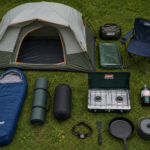
Bolivar is exposed Gulf Coast — wind, salt, sand, and sun. The packing list here is different from a state park campsite in the Piney Woods. Shade structure — A sun canopy or pop-up shelter is not optional in summer. There are no trees. The SETX sun on open beach with no shade is serious business from 9am through 5pm. A 10×10 pop-up canopy ($40–60 at Walmart) or a beach canopy tent with sand stakes is the most important piece of gear you can bring. Your cooler also goes under it. Sand stakes — Standard tent stakes sink in beach sand. Bring sand-specific stakes or sand anchors for your canopy and tent. A set of sand stakes costs $10–15 and is the difference between a secured canopy and watching it roll down the beach in a Gulf breeze. Sun protection — SPF 50+ sunscreen, sun shirt, hat, sunglasses. The reflected glare off the Gulf is unforgiving. Reapply constantly. Bug spray — The beach itself is generally less buggy than inland SETX sites, but the marshes and areas near High Island can have mosquitoes, especially at dawn and dusk. Bring DEET or Picaridin repellent regardless. A quality cooler — Salt air, direct sun, and heat accelerate ice melt significantly. A quality hard cooler with real insulation makes the difference between fresh food and a problem. Pre-chill it the night before, keep it under shade, and follow the 2:1 ice ratio. See our full cooler guide for specific recommendations. Cooler with a lock or tie-down — Raccoons and other wildlife will investigate an unsecured cooler overnight. A bungee strap or small padlock keeps things simple. Tire pressure gauge and portable air compressor — If you’re driving on the beach regularly, consider airing down your tires slightly for better sand traction, especially on softer sections. Re-inflate before getting back on the road. A portable 12V air compressor ($30–40) is worth having if you camp Bolivar regularly. Portable toilet or shovel — The restroom facility is on the Crystal Beach section. If you’re camping further out, plan accordingly. A small camp shovel works for cat holes well away from the water. A portable camp toilet is a cleaner option for extended stays.Best Time to Visit
Fall (October–November): The best camping on Bolivar. Heat breaks, crowds thin dramatically, Gulf water is still warm, and the mosquito situation improves significantly. October evenings on the beach with a campfire are as good as it gets on the Texas Gulf Coast. Winter (January–March): Quiet, cold, and genuinely beautiful. Beach parking is free during these months. You’ll have miles of beach to yourself on weekdays. Bring real cold-weather gear — Gulf winds make 45°F feel like 30°F. Worth experiencing at least once. Spring (March–May): Warming up, good birding near High Island, getting busier toward Memorial Day. Beat the summer crowds by coming in March or April. Summer (June–September): Peak season. Crowds, heat, and the annual Jeep Weekend event (which draws tens of thousands of people and fills every inch of the beach). If you come in summer, go on weekdays and bring serious shade and cooling gear. Hurricane season is active June through November — monitor the National Hurricane Center before any Gulf Coast camping trip.The Ferry — Don’t Miss It
The free Galveston-Bolivar Ferry is one of the great free experiences in Southeast Texas and it’s worth building your trip around it if you haven’t done it before. Pull your vehicle into the ferry line at the Galveston terminal, drive onto the boat, and spend 18 minutes crossing Galveston Bay with views of the port, the Gulf, and whatever’s coming in and out of the Houston Ship Channel. Bottlenose dolphins work the ferry wake regularly — especially on the Bolivar-side crossing in the morning. Brown pelicans and laughing gulls work the deck for handouts (don’t feed them). Cargo ships and tankers from the Port of Houston pass at close range. It runs 24 hours, 7 days a week, and it’s genuinely free for all vehicles. On peak summer weekends, lines back up significantly at the Galveston terminal — leave extra time or use the TX-87 route from SETX to avoid it entirely.FAQ
Is beach camping free at Bolivar Peninsula? Mostly yes. Camping on the beach requires no camping permit and has no time limit. Vehicles parked on the beach require a $10 annual parking sticker available at local businesses. The sticker is free from January through March. There is also a free zone east of Rollover Pass near the Chambers County line where no sticker is required year-round. Can you have a campfire on Bolivar Peninsula? Yes — contained campfires and cooking grills are allowed. No bonfires. Fires must be at least 10 feet from the dunes and no larger than 3x3x3 feet. Always check for active burn bans before building a fire, as county burn bans apply to beach campfires. How long can you camp at Bolivar Beach? There is no enforced time limit on camping at Bolivar Peninsula. Some campers stay for weeks. The only requirement is keeping your parking sticker current. Can any vehicle drive on Bolivar Beach? Yes. The sand is extremely hard-packed and handles standard cars, trucks, SUVs, RVs, and fifth wheels. Drive at 15 mph, never on the dunes, and be aware that softer sections exist near dune access points. Watch the tide before you park close to the water. Are there alligators at Bolivar Peninsula? Not on the open beach, but the marshes and wetlands along the bay side of the peninsula and near High Island do have alligators. Standard SETX water rules apply near any marshy area — don’t approach, don’t feed, keep pets away from the water’s edge. Is Bolivar Peninsula safe for camping? Generally yes. The beach has Galveston County Sheriff patrols. Use common sense: secure your valuables, don’t leave food accessible overnight (raccoons are present), and always monitor weather — the peninsula is low and exposed during storm events. Check the National Hurricane Center during hurricane season (June–November) before any Gulf Coast camping trip. How far is Bolivar Peninsula from Houston? About 70 miles from the Houston metro, or roughly 90 minutes depending on traffic and whether you take the ferry from Galveston or drive TX-87 from the SETX side.Bolivar Peninsula is the most accessible free camping in Southeast Texas — no permit application, no boat required, no backcountry skills needed. Just a vehicle, a $10 sticker, and the Gulf of Mexico out your tent door. If you haven’t camped here yet, it belongs on your list before any other SETX trip. For more free and low-cost camping options across Southeast Texas, see our complete guide to free camping in Texas and our best campgrounds in Southeast Texas for the full regional picture. Before you go, grab the free Ultimate Family Camping Checklist — 83 items across 7 categories built for camping in Southeast Texas.
This post contains affiliate links. If you purchase through these links, we may earn a small commission at no extra cost to you. Thank you for supporting SETX Camping!