
Gulf Coast Texas camping covers everything from 27 miles of free drive-on beach at Bolivar Peninsula to a Texas state park perched on the edge of 4,000 acres of coastal marsh at Sea Rim, to a recently renovated beachside campground on Galveston Island where concrete pads face the Gulf and you fall asleep to the sound of waves 50 feet from your campsite.
For Southeast Texas campers, the Gulf Coast is close, accessible, and genuinely wild in stretches that most of the country doesn’t know exist. This guide covers every significant Gulf Coast camping option within reach of the SETX and Houston region — what each one is actually like, what it costs, the active alerts you need to know about before you book, and which one is right for your kind of trip.
Gulf Coast Camping — The SETX Context
The Texas Gulf Coast runs 600 miles from the Louisiana border to the Rio Grande. The section relevant to Southeast Texas campers — from Sabine Pass to Galveston Island — covers roughly 100 miles of coastline and contains three distinct camping experiences that are genuinely different from each other.
Sea Rim State Park at Sabine Pass is the wildest — 5.2 miles of Gulf beach backed by 15,000 acres of coastal marsh, one of the most remarkable wildlife areas in the entire state. The Gambusia Marsh boardwalk, the kayaking trails through the marsh, and the birding during migration are things you won’t find anywhere else on the Texas coast.
Bolivar Peninsula is the most accessible — 27 miles of free drive-on beach camping with no permit required and no campsite numbers. Pull up wherever you want and stay as long as you want.
Galveston Island State Park is the most developed — recently renovated concrete pads with 30/50-amp service facing the Gulf, a covered picnic table at every site, and beach access steps from your campsite. The closest thing to a full-amenity beach campground on the upper Texas coast.
Each serves a different kind of Gulf Coast camping trip. Here’s the complete picture on all three, plus private RV options along the peninsula.
Active Alerts — Read Before You Book Any Gulf Coast Site
Sea Rim State Park — East Beach closed: As of February 11, 2026, the East Beach is closed to camping and vehicles due to a wash-out. Contact the park at (409) 971-2559 before your trip to confirm current conditions.
Sea Rim State Park — Floating Primitive Campsite closed: The floating boat-in campsite has been closed for extensive repairs since December 2023. No reopening date has been announced as of the time this post was written.
Galveston Island State Park — Boardwalk closures: Some boardwalks are closed due to flood damage as of January 2026. The Short Boardwalk on the Eskimo Curlew Trail is also closed due to storm damage as of April 2026. Check tpwd.texas.gov/state-parks/galveston-island for current conditions.
Burn bans: Texas issues county-level burn bans during dry periods. Check tfs.tamu.edu before building any campfire on the coast.
Hurricane season: June through November. All Gulf Coast campgrounds close when a hurricane threatens. Monitor the National Hurricane Center before any Gulf Coast camping trip during these months.
1. Sea Rim State Park — The Wild Gulf Coast
Address: 19335 S. Gulf Fwy (TX-87), Port Arthur, TX 77640
Phone: (409) 971-2559
Entrance fee: $5/person/day (13+), children free
Gate hours: Opens at 8am
Reservations: texasstateparks.reserveamerica.com
Sea Rim is the closest thing to true wilderness Gulf Coast camping in Southeast Texas. Located on TX-87 about 22 miles south of Port Arthur, the park covers 4,141 acres of beach and an adjacent 15,000+ acres of coastal marsh — one of the largest undeveloped marsh systems on the entire Gulf Coast. The combination of open beach, coastal prairie, and vast marsh creates wildlife density that is genuinely exceptional.
The name tells you what you’re getting: the sea rim — where the Gulf of Mexico meets the coastal marsh at the edge of Texas.
Campsite Types at Sea Rim
Water and Electric Sites — 15 sites, $20/night
Located in the Piping Plover loop, next to the beach access and the dune boardwalk. Each site has a picnic table, outdoor grill, tent pad, water hookup, lantern post, and 30/50-amp service. These are reservable and they go fast on weekends. Note: Sites in the Piping Plover loop are not site-specific reservations — you are assigned a site on arrival.
Primitive Beach Drive-Up Sites — 75 sites, $10/night
Located in the West Beach primitive camping areas. Not reservable — first-come, first-served only, assigned on arrival. You drive onto the beach and pull up to an open area above the tide line. No hookups, no facilities at the site. Spacious, private, and genuinely one of the most spectacular camping situations on the Texas coast when conditions are right.
These sites close due to extreme high tides and weather events without warning. Contact the park before your trip to check current beach conditions: (409) 971-2559.
Floating Primitive Campsite — 1 site, $15/night — CURRENTLY CLOSED
A 13×20-foot wooden floating platform accessible only by shallow draft boat or kayak. Closed for extensive repairs since December 2023. No reopening date available at the time of writing.
What Makes Sea Rim Different
The marsh. Most Gulf Coast campgrounds face the beach on one side and a parking lot or road on the other. Sea Rim is backed by 15,000+ acres of coastal marsh that stretches inland for miles. The result is a landscape that changes completely depending on which direction you’re looking — open Gulf in front, green marsh behind.
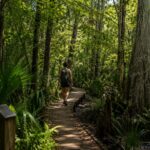
The Gambusia Nature Trail Boardwalk. A short elevated boardwalk through the marshland directly from the campground. Dawn on the Gambusia boardwalk during spring migration is one of the genuine outdoor experiences of Southeast Texas — the diversity and density of birds moving through the coastal marsh is extraordinary.
Kayak trails. Designated paddle routes meander through the marsh. Canoe and kayak rentals are available at the park. The combination of beach camping and marsh paddling in one location is unique on the upper Texas coast.
Horseback riding. Three miles of beach horseback riding are permitted on the Middle Beach. Horse camping with portable pen or trailer tether is allowed on the West Beach. One of the few Texas state parks where equestrian beach camping is genuinely accessible.
Saltwater fishing. Shore fishing, pier fishing, and boat fishing from the Gulf and the Intercoastal Waterway. Speckled trout, redfish, flounder, and sheepshead are the primary species on the Gulf side.
The Honest Assessment of Sea Rim
The mosquitoes at Sea Rim are notorious. The park’s own website warns that mosquitoes can be a major nuisance year-round. After dark it gets severe — I’ve walked out of my tent into what felt like an army of vampire mosquitoes. This is the Gulf Coast marsh, not a dry campground. DEET or Picaridin applied before dusk is non-negotiable. A Thermacell running at your campsite perimeter is strongly recommended for evening hours.
Wild hogs show up on the beach at night. Keep food secured.
Tides affect beach camping access unexpectedly. Check conditions before arriving and have a backup plan.
These are not reasons to skip Sea Rim. They’re reasons to go prepared.
Best time: Fall (October–November) and winter. The mosquito pressure eases, the birding is exceptional during fall migration, and the beach is empty. Spring migration (late April–early May) is worth planning around specifically for the Gambusia boardwalk experience.
2. Bolivar Peninsula — 27 Miles of Free Beach
Bolivar Peninsula is the most accessible Gulf Coast camping in Southeast Texas — no reservation, no campsite number, just 27 miles of Gulf beach where you can drive on and camp wherever you want.
The setup, the free zone vs. paid zone breakdown at Rettilon Road, the $10 annual sticker, the campfire rules, and everything else you need is in our complete Bolivar Peninsula beach camping guide. If you haven’t read it, start there — it’s the most comprehensive guide to free beach camping on the Texas Gulf Coast available anywhere.
The short version:
- Turn left at Rettilon Road (Bolivar Beach Access on Google Maps) for the free zone
- Hard-packed sand supports any vehicle including large RVs
- No permit or reservation required
- $10 annual beach parking sticker required March–December (January–February free)
- Campfires allowed in contained fires, no bonfires, 10 feet from dunes
- Restrooms and rinse showers at the Bolivar Beach Pavilion on Crystal Beach Drive
- Free Galveston-Bolivar Ferry runs 24/7 from the Galveston side
Bolivar vs. Sea Rim: Bolivar is more accessible, more crowded on summer weekends, has more amenities nearby (food trucks, Crystal Beach stores), and is the default Gulf Coast camping choice for most SETX families. Sea Rim is wilder, more remote, has the marsh and kayaking, and gets significantly less traffic.
3. Galveston Island State Park — Beach Camping with Real Amenities
Address: 14901 FM 3005, Galveston, TX 77554
Phone: (409) 737-1222
Entrance fee: $5/person/day (13+), children free
Gate hours: 7am–10pm
Reservations: texasstateparks.reserveamerica.com or (512) 389-8900
Galveston Island State Park is the amenity-forward Gulf Coast option — 2,000 acres of barrier island habitat with a recently renovated beachside campground that draws consistently strong reviews for its concrete pads, covered picnic tables, and direct beach access.
From Houston, it’s I-45 South to Galveston, exit at 61st Street, Seawall Boulevard west to FM 3005, then approximately 13 miles to the park entrance. About 60 miles and 90 minutes from most Houston neighborhoods.
Campsite Types at Galveston Island State Park
Beachside Camping — Gulf-facing sites, 30/50-amp electric and water
The main attraction. Thirty-six sites in three loops facing the Gulf beach. Concrete pads, covered picnic tables with shade shelters, 30 and 50-amp service, water hookups. No sewer — dump station available at the park entrance. Recently renovated and consistently in great shape.
The pads are level, cell service is solid (4 bars, 5G in most of the park), the beach within easy walking distance from any site, and sunrises worth setting an alarm for. The covered picnic table at each site is a meaningful amenity on an exposed Gulf Coast site with no natural tree shade.
Bayside Camping
On the opposite side of FM 3005 from the beachside sites. Quieter, less exposed to Gulf wind. Good option for campers who want a state park experience without the full beach exposure. Lower rates.
Tent-Only Sites
Dry tent sites without hookups available at $15/night. Lowest-cost state park beach camping on the upper Texas coast.
Fees (current as of May 2026):
- Dry tent sites: $15/night
- Water and electric: $20–$35/night depending on amperage and loop
- Plus $5/person/day entrance fee (13+)
- Maximum 14-night consecutive stay
Worth knowing: the entrance fee is charged separately from the site fee. Budget for both.
What Makes Galveston Island State Park Different
The barrier island habitat. The park’s 2,000 acres are one of the few undeveloped sections of Galveston Island — a barrier island ecosystem that most of the island has lost to development. The park preserves coastal prairie, tidal flats, and bay shoreline alongside the Gulf beach. The result is wildlife diversity that a pure beach campground can’t match.
Birdwatching. Galveston Island sits in one of the most productive migratory corridors in North America. During spring and fall migration, the park draws birders from across the country. The combination of beach, bay, and marsh habitats concentrated in 2,000 acres produces species variety that few locations on the Gulf Coast can match.
Bay access. The bayside section of the park provides access to Galveston Bay — calmer water for kayaking and fishing than the Gulf side. Speckled trout and redfish are the primary targets in the bay. Bring a kayak or rent one nearby.
5.5 miles of trails. The barrier island trail system covers beach, prairie, and bay habitats. Several boardwalks (check current closure status) cross the wetland sections.
The Honest Assessment of Galveston Island State Park
This is the right Gulf Coast campground for families who want beach camping with hookups, clean facilities, and a developed experience. It’s not a wilderness camp — it’s a well-run state park with a great beachside setting.
Mosquitoes are a year-round nuisance per the park’s own language. Bring repellent.
The park closes when hurricanes threaten — hurricane season runs June through November and the park is fully exposed on a barrier island. Monitor the National Hurricane Center during these months.
The beaches at Galveston are not the clearest in Texas — you’ll see garbage and debris wash up at times. This is a Gulf of Mexico estuary beach, not a Caribbean beach. Expectations should match the reality of the upper Texas coast.
Best time: Fall and winter for the best beach conditions and birding. Spring migration in April and May for birds. Summer for beach swimming with kids — the park handles summer crowds better than Bolivar since it’s a managed campground.
4. Bolivar Peninsula Private RV Parks
For campers who want hookups on the Bolivar Peninsula without the state park experience, several private RV parks operate along the peninsula:
Bolivar Peninsula RV Park (Crystal Beach)
Centrally located in Crystal Beach on Bolivar. Spacious sites with 30/50-amp service, recently renovated bath house, a large dog park, and updated WiFi. Pull-through and lakefront sites available. Walking distance to Crystal Beach restaurants and the beach via road crossing.
Bolivar East RV Park (Gilchrist)
Located near Gilchrist at the quieter east end of the peninsula. 30/50-amp hookups, fire rings, grills, picnic tables, pet-friendly. Smaller and quieter than the Crystal Beach options.
Both are on the Bolivar side of the ferry, meaning you get all the Gulf access of Bolivar with the convenience of hookups. Rates run $47–$79/night depending on site type and season.
Comparing Your Gulf Coast Options
| Location | Cost | Hookups | Reservable | Best For |
|---|---|---|---|---|
| Bolivar Peninsula (free zone) | $0–$10 sticker | None | No | Free beach camping, any vehicle |
| Sea Rim Primitive Beach | $10 + $5 entry | None | No | Wilderness beach, marsh access |
| Sea Rim Electric Sites | $20 + $5 entry | 30/50-amp | Yes | Piping Plover loop, marsh birding |
| Galveston Island SP Beach | $20–$35 + $5 entry | 30/50-amp | Yes | Amenity beach camping, families |
| Bolivar Private RV Parks | $47–$79 | Full hookup | Yes | RV comfort, beach access |
Gulf Coast Camping Gear — What You Need
The Gulf Coast kit is different from Piney Woods or lake camping. A few specific additions:
- Shade structure — Required at Bolivar and strongly recommended at Sea Rim beach sites. No trees, no natural shade. A 10×10 pop-up canopy keeps the cooler cold and the afternoon bearable.
- Sand stakes — Standard tent stakes sink in beach sand. Sand stakes or sand anchors for your canopy and tent are essential at Bolivar and Sea Rim beach sites.
- DEET or Picaridin repellent — The mosquito situation at Sea Rim in particular is severe. Apply before dusk every evening.
- Thermacell — For campsite perimeter protection at Sea Rim specifically. Running a Thermacell at the site perimeter while you eat dinner changes the evening experience meaningfully.
- Quality cooler — Gulf Coast heat plus direct sun with no shade means your cooler works harder here than at any other SETX camping location.
- SPF 50+ sunscreen — Gulf reflected glare from the water amplifies sun exposure. Reapply constantly.
- Life jackets for anyone going in the water. Gulf rip currents are real. Always swim near others, never alone, and be aware of current conditions.
FAQ
What is the best Gulf Coast camping near Houston?
For free camping, Bolivar Peninsula is 70 miles from the Houston metro and requires no reservation. For the best amenity experience, Galveston Island State Park’s recently renovated beachside sites are 60 miles from Houston via I-45 and have 30/50-amp hookups facing the Gulf. For the wildest experience, Sea Rim State Park near Port Arthur is about 90 miles from Houston and offers both developed sites and primitive beach camping backed by 15,000 acres of coastal marsh.
Is beach camping free in Texas?
At Bolivar Peninsula, yes — the camping itself is free with a $10 annual vehicle parking sticker (free January–March). Primitive beach sites at Sea Rim State Park are $10/night plus a $5/person entrance fee. Galveston Island State Park beach sites start at $15/night for dry sites plus entrance fees.
What are the mosquitoes like at Gulf Coast campgrounds in Texas?
Sea Rim State Park has some of the most severe mosquito conditions of any camping site in Southeast Texas — the marsh environment produces year-round pressure that it’s extreme after dark. Bolivar Peninsula tends to be better, especially in open beach areas with Gulf breeze. Galveston Island State Park notes mosquitoes as a year-round nuisance. DEET or Picaridin repellent is required at all three. See our complete insect repellent guide for what actually works.
When is the best time to camp on the Texas Gulf Coast?
Fall (October–November) is the best overall window — the heat breaks, mosquitoes reduce significantly, hurricane season ends, and the fall migration makes birding exceptional at all three locations. Winter (December–February) is quiet, cool, and offers free beach parking at Bolivar. Spring migration (late April–early May) is worth targeting specifically for Sea Rim’s Gambusia boardwalk birding experience.
Can you drive on the beach at Texas Gulf Coast campgrounds?
Yes at Bolivar Peninsula — hard-packed sand accommodates all vehicles including large RVs. Yes at Sea Rim West Beach primitive sites — you drive to your site above the tide line. Not applicable at Galveston Island State Park — it’s a developed campground with paved roads and pads, not drive-on beach access.
Do these campgrounds close for hurricanes?
Yes. All Gulf Coast campgrounds close when hurricanes threaten. The park service monitors storms actively and issues closures with as much notice as conditions allow. June through November is hurricane season — always check the National Hurricane Center before any Gulf Coast camping trip during these months.
The Texas Gulf Coast has genuinely remarkable camping for people willing to deal with the heat, the mosquitoes, and the Gulf weather. The reward is the marsh at dawn at Sea Rim, the dolphins working the ferry wake at Bolivar, and the sound of Gulf waves from a concrete pad at Galveston Island that feels like waking up in a different world from the Houston metro you left yesterday.
For the complete guide to free camping at Bolivar Peninsula, see our Bolivar Peninsula beach camping guide. For the full SETX camping picture, our best campgrounds in Southeast Texas covers every significant campground in the region.
Before your trip, grab the free Ultimate Family Camping Checklist — 83 items across 7 categories, built for camping in Southeast Texas.
This post contains affiliate links. If you purchase through these links, we may earn a small commission at no extra cost to you. Thank you for supporting SETX Camping!