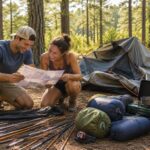

Big Thicket National Preserve camping is unlike anywhere else in Southeast Texas — because there are no campgrounds. Not one developed site, not one hookup, not one reservation system. What Big Thicket has instead is 113,000 acres of the most biologically diverse landscape in North America, a free backcountry permit you pick up at the visitor center, and the freedom to set up camp in the woods, on a sandbar on the Neches River, or alongside a cypress bayou wherever you find a spot that works.
For campers willing to go self-sufficient, it’s one of the genuine wilderness camping experiences left in Southeast Texas. For campers who need developed facilities, the nearest state parks and a private campground right on FM 420 make Big Thicket accessible without the backcountry commitment.
This guide covers both — how to camp inside the preserve, which units are open by season, the paddling trails that combine camping and kayaking, and the nearest developed campgrounds for everyone else.
What Makes Big Thicket Different
Big Thicket National Preserve was established in 1974 as the first national preserve in the United States. It protects the ecological collision zone where the eastern hardwood forests, the Gulf coastal plains, and the Midwest prairies all converge in Southeast Texas — nine distinct ecosystems stacked on top of each other in a way that creates staggering biological diversity.
The numbers tell part of the story: over 300 bird species, 75% of all North American bird species either live here or pass through seasonally. Four species of carnivorous plants growing wild in East Texas soil — pitcher plants, sundews, bladderworts, and butterworts. More species of trees and plants per square mile than almost any similarly sized area in North America. The National Geographic Society called it the “biological crossroads of North America.”
UNESCO designated it a Man and Biosphere Reserve. What that means for campers is this: when you set up in the Big Thicket backcountry, you are sleeping inside one of the most ecologically significant pieces of land in the country, within an hour of Beaumont and 90 minutes of Houston.
How Camping Works at Big Thicket — The Basics
There are no campgrounds, no reservable sites, no hookups, and no fees inside the preserve. Here is exactly how it works:
Step 1 — Get your free permit
Stop by the visitor center at 6102 FM 420, Kountze, TX 77625 to pick up a free backcountry camping permit. The visitor center is open 9am–5pm daily and closed January 1, Thanksgiving Day, and December 25. You can pick up your permit the same day you’re going in or up to 14 days in advance. You’ll need to tell the ranger where and when you’ll be camping. If you’re unsure of the specific unit, ask — rangers know the current conditions and will point you toward the best spots.
No entrance fee. Big Thicket National Preserve does not charge an entrance fee for day use or backcountry camping.
Step 2 — Know the rules
- Camp at least 200 feet from all roads and 100 feet from water
- Pack out everything you pack in — no trash, no food scraps, nothing
- No campfires producing ash — camp stoves only inside the preserve
- Maximum 14 consecutive nights
- Pets on 6-foot leash at all times
- Hunting is permitted in some units — during hunting season (October 1–February 28), camping restrictions apply in certain units
Step 3 — Know the terrain
Big Thicket backcountry means exactly that. The NPS itself warns campers to expect thick brush, fallen trees, tree roots, uneven terrain, and shallow water crossings. Off-trail navigation requires map and compass skills. The forest is dense enough that cell coverage is often nonexistent. Download offline maps before you leave, tell someone where you’re going, and be prepared for conditions that aren’t marked or maintained.
Which Units Are Open for Camping — By Season
Big Thicket is divided into nine land units and six water corridor units. Not all are open for camping year-round. During hunting season (October 1–February 28), access and camping are restricted in several units.
Open Year-Round (No Hunting Season Restrictions)
Turkey Creek Unit
The largest unit in the preserve and the one with the longest trail system. The Turkey Creek Trail runs 15.4 miles through pine uplands, hardwood bottomlands, and baygall swamp. This is the primary backpacking trail in the Big Thicket — multiple camp nights are possible on the Turkey Creek Trail before you ever repeat terrain. Year-round access makes it the most reliable unit for fall and winter camping.
Village Creek Corridor Unit
The Village Creek corridor runs through the heart of the preserve’s most ecologically rich area. It’s accessible for both hiking and paddling — the Village Creek Texas State Paddling Trail runs 20.9 miles through this corridor. Water is dark with tannins, clear and clean, with bald cypress, water tupelo, and black willow along the banks. Alligators are rare here due to natural springs keeping the water cooler than the Neches — a fact worth knowing for families with young children.
Neches River Corridor Unit
The Neches River sandbars are the classic Big Thicket backcountry camping spot — wide, flat, exposed areas above the river level where you can set up a small camp and fall asleep to the sound of the Neches moving through the cypress bottomland. Multiple access points on the river allow for multi-day paddling trips with sandbar camps between launches. Alligators are present throughout the Neches corridor — standard distance rules apply near the water’s edge.
Canyonlands Unit
One of the more unusual landscapes in the preserve — exposed sandstone formations and steeper topography than most of East Texas. Located south of US 190. The terrain gives campers a genuinely different experience from the flatwoods and bayou camping in other units.
Loblolly Unit
A smaller unit characterized by large loblolly pine trees in a relatively open pine forest. Good birding in the pine canopy. Less undergrowth than the baygall and hardwood units.
Year-Round with Hunting Season Restrictions
Big Sandy Creek Unit
One of the most popular day-use areas in the preserve — the Woodlands Trail, Kirby Nature Trail, and Pitcher Plant Trail are all in or adjacent to this unit. During hunting season (October 1–February 28), camping is limited to the Woodlands Trail area only. Spring and summer camping throughout the unit.
Neches Bottom and Jack Gore Baygall Unit
Classic Big Thicket baygall habitat — dense swamp forest of cypress and tupelo growing in standing water, one of the most remarkable landscapes in the preserve. During hunting season, camping is limited to Neches River sandbars only — which is honestly where you want to be anyway. The Cooks Lake to Scatterman Paddling Trail (5 miles) runs through this unit.
Spring and Summer Only (Closed During Hunting Season)
Beech Creek Unit
A beautiful unit with American beech trees rare for Southeast Texas — the Beech Woods Trail runs through stands of beech and magnolia. Closed during hunting season (October 1–February 28). The Beech Creek trailhead is on FM 2992.
Lance Rosier Unit
Named for the longtime Big Thicket naturalist and advocate. Dense, varied habitat in the heart of the preserve near Kountze. Good birding year-round but camping restricted to spring-summer only.
Beaumont Unit
The southernmost unit of the preserve, closest to the city of Beaumont. Spring-summer camping only. The Birdwatchers’ Trail provides access to Trinity River sandbars — good for shorebirds, raptors, and migrant songbirds.
The Trails — What to Know Before You Hike In
Big Thicket has approximately 40 miles of maintained hiking trails across the preserve. Here are the ones worth knowing for camping purposes:
Turkey Creek Trail — 15.4 miles
The preserve’s longest trail and the backbone of multi-day backpacking in the Big Thicket. The trail passes through pine uplands, hardwood bottomlands, and baygall swamp across the Turkey Creek Unit. Full-day hiking required to reach the deeper sections where backcountry camping really feels remote. Open year-round.
Woodlands Trail — 6.5 miles
In the Big Sandy Creek Unit. During hunting season, this trail and its immediate surroundings are the only camping-allowed area in the unit. Good for overnight trips when other units are restricted. The trail passes through longleaf pine savanna — an increasingly rare habitat in East Texas.
Kirby Nature Trail — 2.4 miles
The most visited trail in the preserve, close to the visitor center. Not a backcountry camping trail — too close to roads. Best used as a day hike or orientation walk on arrival day. The trail passes through several of Big Thicket’s ecosystems in a short distance — it’s an excellent first look at the biological diversity before you head deeper.
Pitcher Plant Trail — 0.9 miles
Short loop through a hillside seep where carnivorous plants grow wild. One of the more remarkable short walks in all of Southeast Texas — the same kind of experience as the Pitcher Plant Trail at Village Creek State Park but inside the national preserve. Not a camping destination but a must-do during any Big Thicket trip.
Sundew Trail — 0.7 miles
Access to a bog community where sundews and other carnivorous plants grow alongside the trail. Combined with the Pitcher Plant Trail, these two short walks give you the carnivorous plant experience that makes Big Thicket unique.
Beech Woods Trail — 1 mile
Through American beech and magnolia in the Beech Creek Unit. Spring-summer only. Worth the visit for the unusual forest composition — American beech is near its southern range limit in the Big Thicket.
Paddling and Camping — The Best Combination
Paddling and camping together is the deepest Big Thicket experience available. The two state paddling trails that run through the preserve make multi-day paddle-camping trips possible with minimal vehicle logistics.
Village Creek Paddling Trail — 20.9 Miles
The premier multi-day camping and paddling experience in the Big Thicket system. Village Creek runs flat and clear through the heart of the preserve. The trail is divided into four segments:
- FM 418 to SH 327: 8.6 miles, approximately 4–6 hours paddling
- SH 327 to Baby Galvez: 3.37 miles, approximately 1–2 hours
- Baby Galvez to US 96: 7.1 miles, approximately 3–5 hours
- US 96 to Village Creek State Park: 3.2 miles, approximately 1–3 hours
The full 20.9 miles is too long for a single day — a two-night paddle-camping trip covers it comfortably. Overnight camping permits are free and available at the Big Thicket visitor center. The creek connects at its downstream end to Village Creek State Park in Lumberton, making a car shuttle between FM 418 and the state park the standard way to run the full trail.
Water quality is variable — not recommended for drinking without treatment. Bring a Sawyer Mini water filter or plenty of treated water.
Wildlife on Village Creek: Alligators are rare due to natural springs creating cooler water temperatures. Belted kingfishers, wood ducks, herons, egrets, and bald cypress are the defining sights. White-tailed deer, raccoons, and river otters at dawn and dusk.
Cooks Lake to Scatterman Paddling Trail — 5 Miles
Through the Neches Bottom and Jack Gore Baygall Unit — a cypress-tupelo swamp that looks like a primeval forest. Dark water, standing cypress, Spanish moss, and the sounds of a functioning swamp ecosystem. Five miles makes this a full-day paddle or a reasonable overnight with a sandbar camp.
Neches River Paddling
Multiple access points allow paddling trips of various lengths on the Neches River through the preserve. Sandbar camps along the Neches are some of the most memorable overnight spots in the Big Thicket system — sleeping on a white sand bar in the middle of an East Texas river with cypress banks on both sides and zero light pollution is an experience worth the planning it takes.
Ranger-led paddle trips: The NPS offers guided canoe trips for casual and novice paddlers — canoes, life jackets, and paddles are provided. Bring water, snacks, and water shoes. Check the Big Thicket events calendar for scheduled trips.
Nearby Developed Campgrounds
For campers who want to explore Big Thicket without backcountry camping, these three options put you closest to the preserve with full facilities.
Martin Dies Jr. State Park — Best Overall Base Camp
Located adjacent to B.A. Steinhagen Lake, approximately 20 miles north of the visitor center via US-190. Three units on the Neches River provide paddling access that connects directly into the Big Thicket system via the Walnut Slough, Sandy Creek, and Neches Paddling Trails (3–16 miles). Water and electric hookups, screened shelters, hot showers, and boat ramp access make this the most complete base camp option for Big Thicket visitors.
The combination of Martin Dies Jr. camping + Big Thicket day hiking is the most common approach for SETX families. See our complete Martin Dies Jr. State Park guide for all the details.
Village Creek State Park — Best for Paddling-Focused Trips
Ten miles north of Beaumont in Lumberton — directly on Village Creek, which connects to the Big Thicket paddling trail. A multi-day paddling trip starting from FM 418 at the top of the Village Creek Paddling Trail and ending at Village Creek State Park is one of the signature SETX camping experiences. The state park provides the downstream endpoint with showers, campsites, and a place to call for a shuttle back to the put-in.
Water and electric sites, primitive sites, and screened shelters available. See our Village Creek State Park complete guide.
Big Thicket Hideaway RV Park — Closest to the Visitor Center
Address: 5539 FM 420, Kountze, TX 77625
Phone: (409) 550-6968
Website: bigthickethideawayrv.com
The only private campground right on FM 420 adjacent to the preserve’s visitor center. Full hookup RV sites (30/50-amp), cabin rentals, kayak rentals, showers, laundry, and WiFi. If you want to sleep in a hookup site within a mile of the Big Thicket Visitor Center, this is your option. Kayak rentals are a genuine asset — you can rent here and paddle the preserve without bringing your own boat.
Wildlife — What You’ll Actually Encounter
The Big Thicket’s wildlife reflects its status as a biological crossroads. Here’s what’s realistic to expect:
Birds: Over 300 species documented — 75% of all North American bird species either live here or pass through seasonally. The preserve was designated a Globally Important Bird Area in 2001. Fall migration (October–November) and spring migration (April–May) are the peak windows. Year-round residents include pileated woodpeckers, barred owls, red-shouldered hawks, wood ducks, and prothonotary warblers in the riverside bottomlands.
Alligators: Present in the Neches River corridor and lower waterways. Less common in Village Creek due to cooler spring-fed water temperatures. Maintain 30-foot distance, never feed, keep children and pets away from water’s edge.
River otters: Occasionally spotted in Village Creek and the Neches corridor. Dawn and dusk are the best windows.
White-tailed deer: Common throughout the preserve, especially in the pine upland sections at dawn and dusk.
Wild hogs: Present throughout the preserve. A nuisance rather than a danger — keep food secured.
Carnivorous plants: The preserve protects four species — pitcher plants, sundews (two species), bladderworts, and butterworts. The Pitcher Plant Trail and Sundew Trail provide the most accessible viewing, but the plants occur throughout the seep and bog habitats across the preserve. The best viewing is spring (April–May) when pitcher plants are in flower.
What to Pack for Big Thicket Backcountry
This is genuine backcountry camping — be prepared accordingly.
Water: No potable water anywhere in the backcountry. Bring more than you expect to need or carry a Sawyer Mini water filter. Village Creek water is not recommended for drinking without treatment.
Bug protection: This is non-negotiable in the Big Thicket. Mosquitoes, ticks, and chiggers are all present throughout the preserve year-round, though they ease significantly in winter. Apply Picaridin or DEET repellent before any outdoor time. Treat clothing with Permethrin before the trip — the tick protection it adds is particularly important in Big Thicket backcountry. A Thermacell at the campsite perimeter is worth the weight for overnight camps.
Camp stove only: No ash-producing campfires anywhere in the preserve. A lightweight backpacking stove and fuel canisters are required for cooking.
Navigation: Download offline maps before you leave. Big Thicket trails are maintained but the backcountry between trails is genuinely dense. Cell service is limited to nonexistent throughout most of the preserve. Carry paper maps from the visitor center and know how to use them.
Dry bags: Stream crossings and riverside camping mean moisture. Electronics, sleeping gear, and fire-starting equipment in dry bags.
Snake awareness: Venomous snakes are present throughout the preserve — water moccasins in waterway areas, copperheads in upland zones. Watch where you step and never reach into brush or under logs without checking first. Snake gaiters are worth considering for off-trail travel in dense areas.
Leave No Trace: The Big Thicket backcountry stays accessible because people take care of it. Pack out everything. Leave nothing behind, including food scraps, toilet paper, and anything else you carried in.
Best Times to Camp at Big Thicket
Fall (October–November): Best weather, best birding during migration, reduced mosquitoes. The trade-off is hunting season restrictions in some units beginning October 1 — plan around the seasonal availability chart above.
Spring (April–May): Wildflowers, peak carnivorous plant flowering (April), exceptional spring migration, comfortable temperatures before the heat builds. All units open. This is the best overall window for a first Big Thicket backcountry trip.
Winter (December–February): Light crowds, cool temperatures excellent for hiking, bald cypress trees show fall color into December. Hunting season restrictions apply. The coldest nights require real cold-weather gear — East Texas winter with no campfire means you rely entirely on your sleeping bag and layers.
Summer (June–August): The most challenging window. SETX summer heat plus dense forest humidity plus peak mosquito season is a genuine endurance test. Experienced campers do it successfully — start hiking at dawn, shelter during midday, be thorough with bug protection every single evening.
FAQ
Is there camping inside Big Thicket National Preserve?
Yes — backcountry camping only. There are no developed campgrounds, hookups, or designated campsites. Camping is permitted throughout most of the preserve with a free permit obtained at the visitor center at 6102 FM 420, Kountze, TX. The permit is free and can be obtained the same day.
Is Big Thicket National Preserve free?
Yes. No entrance fee. No camping fee. The backcountry camping permit is free. The only cost inside the preserve is for hunting permits during hunting season.
Where do I get a Big Thicket camping permit?
At the visitor center: 6102 FM 420, Kountze, TX 77625 | (409) 951-6700 | Open 9am–5pm daily, closed January 1, Thanksgiving, and December 25. Pick up your permit the same day or up to 14 days in advance.
Can you have a campfire in Big Thicket National Preserve?
No campfires producing ash are allowed anywhere in the preserve. Camp stoves using propane or other contained fuel are permitted. This is a strict rule — don’t build wood fires in the preserve.
Are there alligators in Big Thicket?
Yes, in the Neches River corridor and lower waterways. Alligators are rare in Village Creek due to cooler spring-fed water temperatures. Maintain 30-foot distance, never feed, keep children and pets away from the water’s edge.
How do I get to Big Thicket National Preserve?
The visitor center is the best starting point: 6102 FM 420, Kountze, TX 77625. From Beaumont: Take US-287 North/US-69 North to Kountze, then FM 420 for approximately 8 miles. From Houston: Take I-10 East to US-90 East to TX-326 South. The preserve has no single entrance — it consists of separate units spread across seven counties.
Can you paddle and camp in Big Thicket National Preserve?
Yes. The Village Creek Paddling Trail (20.9 miles) and the Cooks Lake to Scatterman Trail (5 miles) both allow paddle-camping with a free permit. The Village Creek trail is the most popular multi-day option — a two-night trip covers the full 20.9 miles between FM 418 and Village Creek State Park.
The Big Thicket is the SETX outdoor experience that most people in the region have never had — not because it’s difficult to get to, but because “biological crossroads of North America” doesn’t sound as immediately compelling as “beach camping” or “bass fishing.” It should. The carnivorous plants, the birding, the dark cypress waterways, the genuinely wild forest — it’s unlike anything else accessible within 90 minutes of Houston.
For nearby developed camping, see our Martin Dies Jr. State Park guide and Village Creek State Park guide. For the complete SETX camping picture, our best campgrounds in Southeast Texas covers everything.
Before your trip, grab the free Ultimate Family Camping Checklist — 83 items built for camping in Southeast Texas.
This post contains affiliate links. If you purchase through these links, we may earn a small commission at no extra cost to you. Thank you for supporting SETX Camping!