
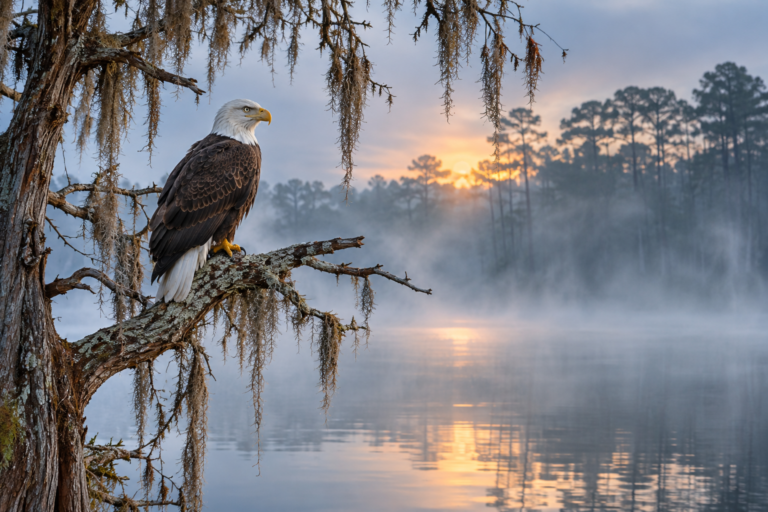
Winter camping in Southeast Texas is the season most people write off and most campers who try it never forget. Nobody is going to mistake a SETX January for Colorado, but nobody should mistake it for summer either. The mosquitoes are mostly gone, the campgrounds are close to empty, the bald eagles are back on the lakes, and a campfire finally feels like the right idea instead of a dare. The catch is that the cold here is a damp, windy cold, and it shows up on a schedule set by whatever front is coming down out of the Panhandle that week.
I’ve camped this region in every season, and winter is the one that rewards preparation more than any other. Show up ready and you get quiet campgrounds, cheap sites, and wildlife you won’t see in July. Show up in cotton and a summer sleeping bag and you’ll learn what a 38-degree night with 90 percent humidity feels like. This guide covers what winter in SETX really looks like, where to go, what to pack, and the safety points that matter.
What Winter Really Looks Like in Southeast Texas
Winter runs roughly December through February. Most days are mild and often sunny, with highs in the 60s, and overnight lows usually land in the 40s. Then a front moves through, and the lows drop into the 30s or below.
Cold fronts are the whole story. The locals call them northers. The wind swings around to the north, the temperature drops 20 degrees or more in a few hours, and a mild afternoon turns into a hard freeze overnight. A front can bring a night or two at or below freezing, then the weather warms right back up. Check the forecast for the entire stretch of your trip, not only the day you leave.
It’s a wet cold. The humidity that makes July miserable doesn’t leave in winter. Damp air pulls heat off your body faster than dry air at the same temperature, which is why a 40-degree night in SETX can feel colder than the same number in the Hill Country. Wet clothing and a wet sleeping bag are the real danger, not the number on the thermometer.
On the coast, the wind adds to it. Bolivar, Galveston Island, and Sea Rim have nothing between you and the Gulf. A 45-degree night with a 20 mph north wind is a very different night than the same temperature in the Piney Woods.
Rain comes in long gray stretches. Summer storms blow through in an hour. Winter rain can settle in for a day or two. Plan a dry place to cook and sit.
Why Winter Is Worth It
The Campgrounds Are Nearly Empty
After the holidays, most SETX state parks and Corps campgrounds are quiet midweek and light even on weekends. The sites that need booking months out in March and October are often available with a few days’ notice. You get your pick of the loop.
The Bugs Mostly Take the Season Off
A hard freeze knocks the mosquito population way down. You’ll still see a few on a warm afternoon, and it’s smart to keep repellent in the truck, but winter is the one season you can sit outside at dusk without a Thermacell. Fire ants slow down on cold days too. Check the ground before you set up anyway.
The Bald Eagles Are Here
This is the best reason to winter-camp in East Texas. Bald eagles winter on the big reservoirs, and the Corps describes the area around Sam Rayburn as winter habitat for them, with eagles soaring over the lake or perched on flooded snags and tall pines along the shore. TPWD notes that multiple pairs nest around Lake Livingston and that sightings are most frequent in fall and winter. Bring binoculars and scan the tall dead pines along the shoreline in the early morning.
The Waterfowl Arrive
Ducks, coots, and grebes pile onto the lakes, the Gulf marshes, and the river sloughs from November through February. Sea Rim, Galveston Island, Steinhagen, and the Wolf Creek and Rush Creek sloughs at Martin Dies Jr. are all at their best for waterfowl in the cold months.
Campfires Finally Make Sense
A fire after dark on a 40-degree night is the entire point of the trip. The only thing standing between you and one is a burn ban, so check before you leave (more on that below).
The Fishing Doesn’t Shut Down
It slows down, but it doesn’t quit. Crappie hold on the timber and brush piles, catfish stay catchable in the deeper channels, white bass school up in deep water before their spring run, and redfish and sheepshead stay on the Bolivar jetty. See our fishing guides for Sam Rayburn, Lake Livingston, Steinhagen, and Bolivar Peninsula.
The Sky Is Better
Cold air holds less moisture, and clear winter nights are the best stargazing of the year in this region. On Saturday nights the George Observatory at Brazos Bend opens its telescopes to the public. Buy tickets in advance and check the schedule first.
It Costs Less
Several places run off-season deals. Galveston Island State Park has offered discounted weekly and monthly non-peak rates on bayside electric sites from November through February (confirm current rates before you book). At Corps of Engineers campgrounds like Sandy Creek and Magnolia Ridge, an America the Beautiful Senior Pass cuts your site fee in half, which brings a night of camping down to roughly $9–$10. See the Sandy Creek guide and the Magnolia Ridge guide for the details.
The SETX Winter Calendar
| Month | Typical Weather | Bugs | Crowds | Best For |
|---|---|---|---|---|
| December | Mild days, first real fronts | Low | Light, busier around the holidays | Waterfowl, eagles arriving, campfires |
| January | Usually the coldest month, hard freezes possible | Very low | Lowest of the year | Eagles, quiet trails, stargazing |
| February | Swings between cold and warm | Low, rising by month’s end | Light, building | Pre-spawn fishing, early white bass runs |
The Best SETX Campgrounds for Winter
For Eagles and Big Water
Sam Rayburn Reservoir. The reservoir and the surrounding Angelina National Forest are wintering habitat for bald eagles, and the Corps campgrounds stay open through winter. Rayburn Park on the north shore is open year-round with 16 sites that have water and 50-amp electric, and it doesn’t take reservations through Recreation.gov, so call ahead. Mill Creek, Twin Dikes, and the other Corps parks are also worth a look. See the complete Sam Rayburn guide and the campground guide.
Lake Livingston State Park. Eagles nest around the lake and winter sightings are common from the shoreline. The park is open year-round and quiet in winter. See the Lake Livingston State Park guide and the reservoir campgrounds comparison.
B.A. Steinhagen Lake. Sandy Creek and Magnolia Ridge are open year-round, the waterfowl numbers are big, and the senior-pass rates make this the cheapest good camping in the region. Fish the Neches River channel for catfish if you have a boat. Start with the Steinhagen overview.
For Birds and Gulf Coast Quiet
Sea Rim State Park. Waterfowl in the marsh, an empty beach, and the Gambusia boardwalk with nobody on it. Prescribed burns are planned December through March, so call the park at (409) 971-2559 before you go, and expect the Gulf wind. See the Sea Rim guide.
Galveston Island State Park. The beachside sites are modern and have covered shelters, and the bayside has the best birding. Prescribed burns run November through April, and the park posts active alerts, so check the park page before you book. See the Galveston Island guide.
Bolivar Peninsula. Free beach camping with essentially no crowd and good fishing, but it’s fully exposed. Bring a warmer bag than you think you need and a windbreak. See the Bolivar guide.
For Woods and Quiet Trails
Huntsville State Park. The Chinquapin Trail around Lake Raven in winter is empty and quiet, and eagles are an occasional winter sighting over the lake. Trails close when they’re muddy, so ask at the office. See the Huntsville guide.
Brazos Bend State Park. Winter is one of the best times here. The crowds are gone, waterfowl are on the lakes, alligators are slower in the cold, and the George Observatory is open Saturday nights. The park runs prescribed burns August through April, so confirm with the park at 979-553-5101. See the Brazos Bend guide.
Angelina National Forest. Boykin Springs is first-come, first-served and open in winter, and the dispersed areas are nearly empty. The Sawmill Trail is easy hiking in cool weather. See the Angelina National Forest guide.
For Comfort in the Cold
If it’s going to be a hard-freeze weekend and you want a roof, Lake Tombigbee has cabins with heat starting at $65 a night near Livingston, with a stocked lake and fishing included. See the Lake Tombigbee guide. Screened shelters at state parks give you a wind break but they aren’t heated, so they only help in mild weather.
Places That Change in Winter — Read Before You Book
Wolf Creek Park (Lake Livingston) closes December through February. The Trinity River Authority park runs March through November. Use the state park, On The Lake RV Resort, or Bethy Creek instead.
Big Thicket has hunting-season restrictions. From October 1 through the end of February, several units close to camping or limit it to specific areas. Beech Creek, Lance Rosier, and the Beaumont Unit are spring-summer only, and in some units camping is limited to the Woodlands Trail area or river sandbars. Read the Big Thicket guide before you plan a backcountry trip.
Deer season is open. Hunting is legal in Angelina National Forest and the Angelina-Neches/Dam B Wildlife Management Area next to Steinhagen. Wear blaze orange when you’re walking in the woods in those areas. Texas state parks generally don’t allow hunting.
Prescribed burns. Brazos Bend, Galveston Island, and Sea Rim all do winter burns. Some trails and camping areas close temporarily. A phone call beats a surprise.
Burn bans can happen in winter. Dry spells and wind can trigger county burn bans any time of year. Check tfs.tamu.edu before you load the firewood, and carry a propane stove so a ban doesn’t end dinner.
Reserve early for the weekends that matter. Texas state park reservations open up to five months out, and if you haven’t checked in by noon the day after your arrival date, your reservation may be canceled. Holiday weekends and warm spells still fill up.
Cold-Weather Safety That Matters in SETX
Keep Everything Dry
Cotton is the thing to avoid. It soaks up moisture and holds it against your skin. Wear synthetic or wool next to your skin, bring a spare set of everything, and keep the dry set sealed in a bag you don’t open until bedtime. Wet gear is how a manageable cold night turns into a dangerous one.
Watch for Hypothermia
It doesn’t need freezing temperatures. A damp 45 degrees with wind will do it. Early signs are shivering that won’t stop, fumbling hands, slurred speech, and sudden clumsiness. Get the person out of the wind, into dry clothes, and into a warm bag with something warm to drink.
Never Burn Fuel Inside a Tent
Carbon monoxide kills campers every winter. Don’t run a propane heater, a camp stove, a lantern, or a charcoal grill inside a tent, a closed-up vehicle, or a screened shelter you’ve sealed with tarps. A battery-powered carbon monoxide alarm is cheap insurance for any winter trip. For sleeping warm, a hot water bottle in your bag does more good than a heater ever will.
Ice Is a Bigger Deal Than It Looks
SETX doesn’t see ice often, and it isn’t set up for it. Bridges and overpasses freeze first. If the forecast shows freezing rain, don’t drive to the campground. Cancel the trip.
Protect Your RV Plumbing
When temperatures drop below freezing, exposed water lines and hoses can freeze. Use a heated water hose, wrap exposed fittings, and disconnect and drain if the freeze will last more than a night.
Short Days
Daylight Saving Time is over, and sunset in December comes around 5:30pm. Plan on setting up camp by 4 and having a headlamp on every person.
Alligators Are Slower, Not Gone
Cold slows them down, and they bask on warm afternoons. They’re still in the water. The same rules apply, and our alligator safety guide covers them. Snakes also come out on the first warm day after a cold stretch, so watch your footing.
The Winter Gear System
Sleeping — Where Most Winter Trips Are Won or Lost
- Sleeping bag: For a December through February trip, bring a bag rated to 20°F. The rating is closer to a survival limit than a comfort limit, so a 20°F bag keeps most people comfortable down to the low 30s. A 20-degree sleeping bag covers a hard freeze. Your 40-degree summer bag won’t.
- Sleeping pad: The ground steals more heat than the air does. An insulated sleeping pad with a high R-value matters more than the bag on a cold night. Stack a foam pad under an inflatable pad if you want extra margin.
- Liner and extras: A fleece sleeping bag liner adds a few degrees. Put a hot water bottle in the foot of the bag, a beanie on your head, and dry wool socks on your feet.
Clothing — Layers, Nothing Cotton
- Base layer: Merino or synthetic long underwear
- Mid layer: Fleece or a light puffy jacket
- Outer layer: Waterproof rain jacket and pants. Wind and rain are the real enemy in SETX winters.
- Feet and hands: Wool socks, waterproof boots, gloves, and a beanie. Throw in a pack of hand warmers too.
Shelter
Your three-season tent works in SETX if it has a full rainfly, but condensation is your problem in winter. A sealed tent full of warm, damp breath drips on you at 3am. Crack the vents even when it’s cold, and pitch out of the wind. A 10×12 tarp strung over your cooking area keeps you dry during a rainy stretch. Use heavy-duty stakes, because wind and soft wet ground pull cheap stakes right out. On the beach, use sand stakes.
Kitchen and Light
- Use a propane stove and bring a spare canister. On a hard-freeze night, keep your fuel canister in the vehicle or near your sleeping bag so it doesn’t lose pressure.
- A headlamp for every person with fresh batteries. Cold drains batteries faster, so carry spares in an inside pocket.
- A thermos of something hot in the morning is the best $20 you’ll spend. A vacuum insulated bottle keeps coffee hot through a cold morning.
For the full SETX gear rundown, see our best camping gear for Texas guide.
Winter Camp Food
Cold weather camping burns calories, and hot food is the whole point. Dutch oven chili, foil-packet sausage and potatoes, hot oatmeal, and a pot of coffee carry a winter weekend. A Lodge camp Dutch oven over coals does stews, beans, and cobbler. The Southeast Texas Campfire Cookbook has Dutch oven and foil-packet recipes written for SETX conditions, and our campfire recipes for families cover the kid-friendly ones. Hot chocolate made on the camp stove is the thing kids remember.
If there’s a burn ban, every recipe works on a propane stove.
What to Do in Winter
- Look for eagles. Walk or drive the shoreline at sunrise with binoculars. Dead snags and tall pines are where they perch.
- Paddle the sloughs on a calm morning. Cold, still mornings on the Martin Dies Jr. sloughs are quiet and beautiful, and waterfowl are everywhere. Dress for cold water and keep life jackets on. See our Martin Dies Jr. kayaking guide.
- Fish. Slow down your presentations and target deeper water.
- Hike. Without the heat and bugs, SETX trails are at their best. The Chinquapin at Huntsville, the Sawmill Trail at Boykin Springs, and Turkey Creek in the Big Thicket (check unit access first) are all good winter hikes.
- Try geocaching. It’s a good winter activity because it gets you outside and moving. Download the free Geocaching app and look for caches near your campground.
- Stargaze. Get away from the lights and let your eyes adjust for 20 minutes.
FAQ
Is it too cold to camp in Southeast Texas in winter?
No. Winter days are usually mild, and the coldest nights are manageable with a 20°F bag, an insulated pad, and dry layers. The risk is damp cold and wind, not deep cold. Check the forecast for fronts and be ready to cancel for freezing rain.
What sleeping bag do I need for winter camping in Southeast Texas?
A bag rated to 20°F covers nearly every night in the region, including hard freezes. A 30–40°F bag works for mild December nights if you add a liner and a warm pad. You don’t need an expedition-grade bag here.
Are there bugs in winter in SETX?
Far fewer. A hard freeze knocks mosquitoes down and slows fire ants. Warm afternoons can bring a few back, so keep repellent in the truck.
Where can I see bald eagles in Southeast Texas?
Lake Livingston and Sam Rayburn Reservoir both have documented winter eagles, and B.A. Steinhagen is worth scanning too. Fall and winter are the best times, and early morning is best. Scan tall pines and dead snags along the shoreline.
Are Texas state parks open in winter?
Yes. Most are open year-round and lightly visited in winter. Check each park’s page for active alerts, prescribed burns, and trail closures before you go. Reservations are open up to five months ahead.
Can I have a campfire in winter?
Usually. Winter dry spells and wind can trigger burn bans, so check tfs.tamu.edu before your trip and bring a propane stove.
Is winter camping safe with kids?
Yes, with planning. Pick a developed campground, bring warmer sleeping gear than you think you need, keep kids dry, and have a plan for retreating to the vehicle or a cabin. See our Ultimate Guide to Family Camping in Texas for more family planning.
What is the best winter campground near Houston?
Brazos Bend State Park, Huntsville State Park, and Lake Livingston State Park all work well in winter. Brazos Bend adds the George Observatory on Saturday nights and winter waterfowl.
Winter is the season for the campers who actually like camping. The bugs are gone, the crowds are gone, and what’s left is the part that matters: a quiet lake, a good fire, and an eagle on a snag at sunrise. Pack for the damp cold, watch the fronts, and you’ll have a SETX campground to yourself.
For more seasonal planning, see our fall camping guide and the best campgrounds in Southeast Texas. On a tight budget, our budget camping guide covers the cheapest ways to camp the region.
Before your next trip, grab the free Ultimate Family Camping Checklist — 83 items across 7 categories, built for camping in Southeast Texas.
This post contains affiliate links. If you purchase through these links, we may earn a small commission at no extra cost to you. Thank you for supporting SETX Camping!

